

Clogged drains cause more than headaches—they lead to water damage repairs that can cost up to $4,000 if ignored. Many homeowners miss subtle clues until it becomes a costly emergency. Knowing how drain cleaning works helps protect both your plumbing and your wallet. This guide sheds light on why keeping your drains clear matters, common warning signs to watch for, and the methods professionals use to keep water flowing smoothly.
Table of Contents
- What Is Drain Cleaning and Its Purpose
- Types of Drain Cleaning Methods Explained
- Key Benefits of Regular Drain Cleaning
- Common Causes and Warning Signs of Clogged Drains
- DIY Versus Professional Drain Cleaning Services
- Risks, Costs, and Maintenance Best Practices
Key Takeaways
| Point | Details |
|---|---|
| Essential Purpose of Drain Cleaning | Drain cleaning is crucial for preventing clogs, eliminating health hazards, and maintaining plumbing efficiency. Regular maintenance can extend the lifespan of pipes. |
| Methods of Drain Cleaning | Professional techniques include drain snaking, motorized augers, and hydro jetting, each suited for specific blockage types. Understanding these methods is vital for effective solutions. |
| Benefits of Regular Cleaning | Consistent drain maintenance prevents costly repairs and health risks by ensuring optimal drainage and eliminating bacteria. Homeowners save money by addressing minor issues proactively. |
| DIY vs. Professional Services | While DIY may address simple clogs, professional plumbers offer advanced tools and diagnostics that prevent future problems. Hiring experts is a long-term investment in plumbing health. |
What Is Drain Cleaning and Its Purpose
Drain cleaning is a critical maintenance process designed to remove blockages, debris, and buildup within your home’s plumbing system.
At its core, drain cleaning serves multiple essential purposes for residential and commercial properties. The primary objectives include:
- Preventing slow drainage and water backups
- Eliminating potential health hazards from standing water
- Maintaining optimal plumbing system efficiency
- Extending the lifespan of pipes and drainage infrastructure
Understanding the nuanced approach to drain cleaning helps homeowners recognize when professional intervention becomes necessary. Different types of blockages require specific techniques, ranging from mechanical snaking to advanced hydro-jetting methods.
Professional drain cleaning goes beyond simple unclogging. It involves comprehensive inspection, targeted cleaning, and preventative recommendations tailored to your specific plumbing configuration. By addressing potential issues before they escalate, homeowners can save significant money and prevent disruptive plumbing emergencies.
Types of Drain Cleaning Methods Explained
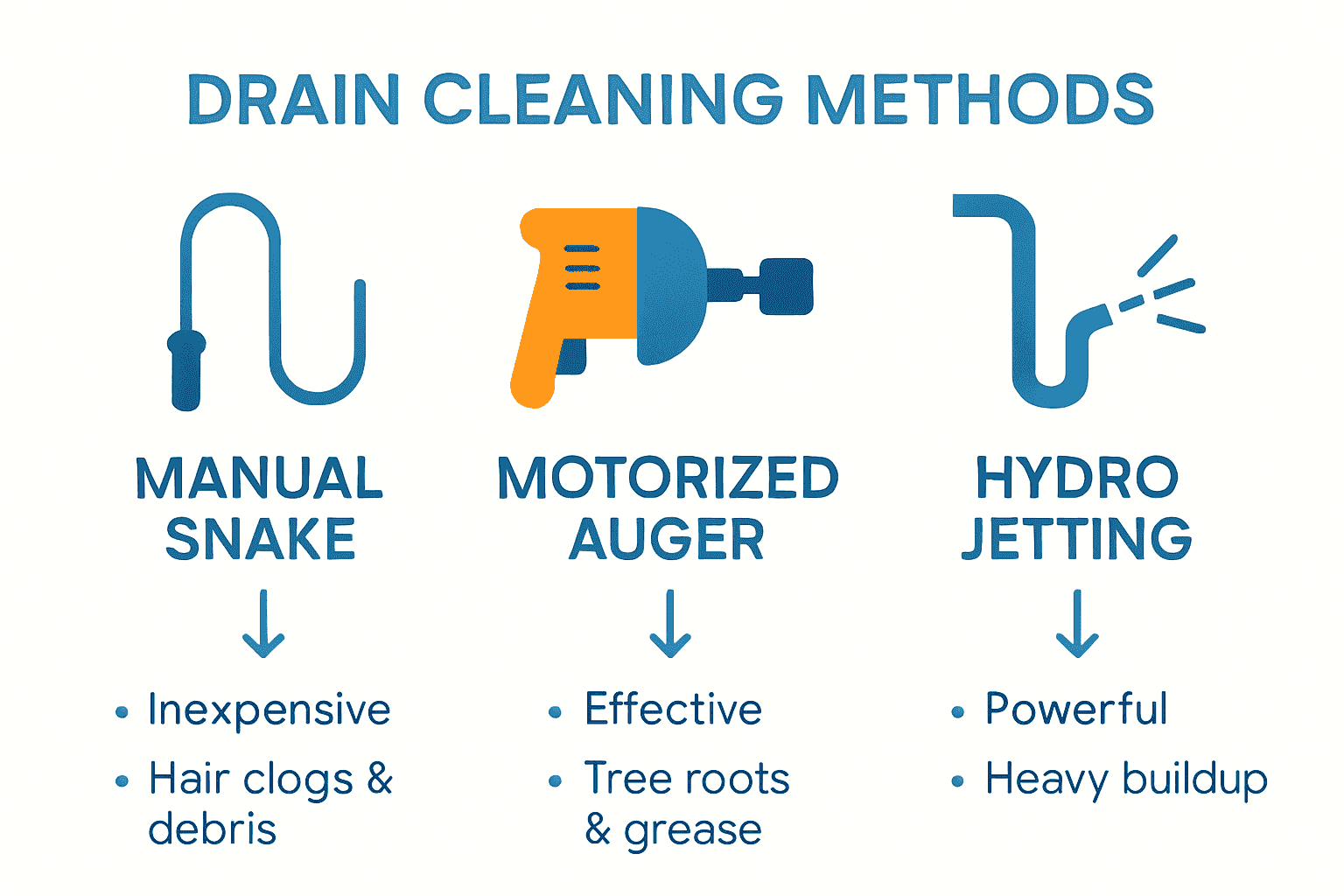
Professional plumbers utilize several sophisticated techniques to address drainage issues effectively. According to 8th Bend Plumbing, Heating, and Cooling, the primary drain cleaning methods include manual drain snakes, motorized drain augers, and advanced hydro jetting techniques.
Here’s a comparison of professional drain cleaning methods:
| Method | How It Works | Ideal For | Key Advantages |
|---|---|---|---|
| Drain Snaking | Flexible cable dislodges blockages | Minor/moderate clogs | Fast Simple Low risk |
| Motorized Auger | Motor adds torque and reach for tough clogs | Deep, stubborn blockages | Powerful Efficient Versatile |
| Hydro Jetting | High-pressure water removes buildup & debris | Severe/prolonged buildup | Comprehensive Cleans pipe walls Removes bacteria |
Drain Snaking remains one of the most traditional and widely used methods. This technique involves:
- Inserting a flexible metal cable into the drain
- Manually or mechanically rotating the cable to dislodge blockages
- Physically breaking up or extracting accumulated debris
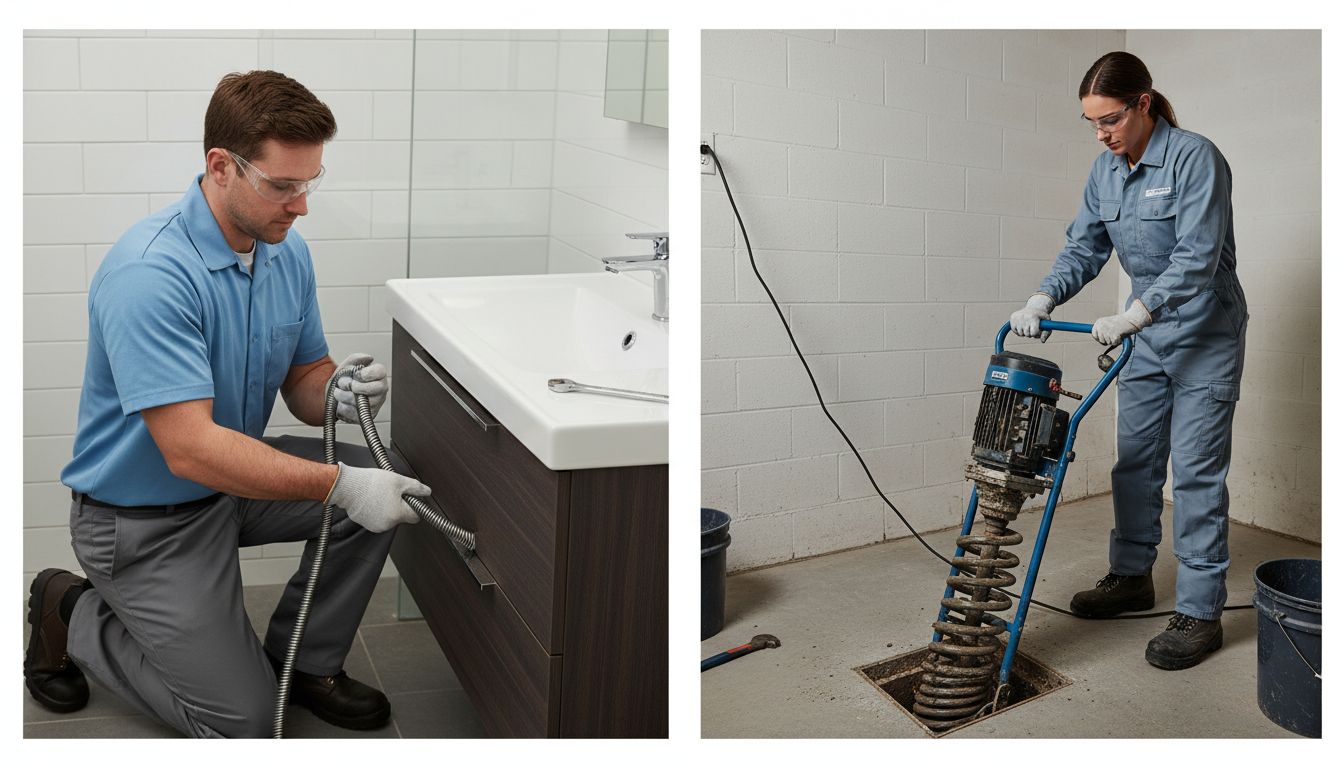
- Working effectively for minor to moderate clogs
Motorized drain augers represent a more powerful approach to tackling stubborn blockages. These tools can handle more complex drainage challenges in both residential and commercial settings. Unlike manual snakes, motorized augers provide increased torque and reach, allowing plumbers to address deeper and more resistant clogs.
Hydro jetting stands out as the most advanced drain cleaning method.
This technique uses high-pressure water jets to comprehensively clean pipe interiors. The process not only removes existing blockages but also eliminates accumulated grease, mineral buildup, and potential bacterial growth, essentially performing a thorough pipe rehabilitation in a single service.
Key Benefits of Regular Drain Cleaning
Regular drain cleaning is more than just a maintenance task—it’s a critical investment in your home’s long-term health and functionality.
The key advantages of consistent drain maintenance include:
- Preventing costly water damage and potential structural issues
- Eliminating unpleasant odors caused by accumulated debris
- Reducing the risk of severe clogs and emergency plumbing repairs
- Maintaining optimal water flow and drainage efficiency
- Extending the overall lifespan of your home’s plumbing infrastructure
Most homeowners underestimate the potential long-term savings associated with proactive drain maintenance. Why Regular Drain Cleaning Matters reveals that investing in periodic professional drain cleaning can help you avoid expensive repairs and potential property damage. By addressing minor blockages and buildup before they escalate, you’re essentially protecting your home’s most critical infrastructure.
Beyond the financial benefits, regular drain cleaning significantly improves your home’s hygiene and overall environmental quality. Accumulated debris, bacteria, and potential mold growth can create health risks and compromise your living space. Professional drain cleaning removes these potential hazards, ensuring a cleaner, safer home environment for you and your family.
Common Causes and Warning Signs of Clogged Drains
Understanding the root causes of drain blockages is crucial for proactive home maintenance. Clogs typically result from “accumulated debris like hair, soap scum, and food particles” that gradually build up within your plumbing system.
The most common culprits behind drain blockages include:
- Kitchen Waste: Grease, food scraps, and coffee grounds
- Bathroom Debris: Hair, soap residue, and personal care products
- Foreign Objects: Accidentally flushed items like hygiene products
- Mineral Buildup: Hard water deposits and calcium accumulation
- Tree Root Intrusion: Underground pipe penetration in older systems
Early warning signs of potential drainage issues demand immediate attention. Homeowners should watch for subtle indicators such as gurgling sounds, slow water drainage, unpleasant odors, and water backing up in sinks or showers.
Professional plumbers recommend paying close attention to these warning signals. Persistent drainage problems can quickly escalate from minor inconveniences to major plumbing emergencies. The longer blockages remain unaddressed, the more extensive and expensive the potential repairs become, potentially causing structural damage to your home’s plumbing infrastructure.
DIY Versus Professional Drain Cleaning Services
Homeowners often face a critical decision when confronting drain blockages: tackle the problem themselves or call in professional services. While DIY techniques can address simple clogs, professional services offer advanced tools like motorized drain augers and hydro jetting, which are more effective for stubborn or complex blockages.
DIY Drain Cleaning Limitations typically include:
- Limited tool effectiveness
- Risk of potential pipe damage
- Incomplete blockage removal
- Temporary solutions for recurring issues
- Lack of diagnostic capabilities
Understanding Why Professional Pipe Repair Matters highlights the nuanced expertise professional plumbers bring to complex drainage challenges. Professional services not only clear existing blockages but also conduct comprehensive diagnostics to identify underlying issues that might escape an untrained eye.
The true value of professional drain cleaning lies in its preventative approach. Experienced technicians can detect early warning signs of potential plumbing problems, potentially saving homeowners thousands in future repair costs. While DIY methods might provide temporary relief, professional services offer a thorough, long-term solution that protects your home’s entire plumbing infrastructure.
Risks, Costs, and Maintenance Best Practices
Homeowners often underestimate the potential financial and structural consequences of neglected drain maintenance. According to 8th Bend Plumbing, “Neglecting drain maintenance can result in severe blockages, leading to expensive repairs.”
Potential Risks of Poor Drain Maintenance include:
- Structural water damage to home foundations
- Potential mold and mildew growth
- Compromised pipe integrity
- Reduced property value
- Increased long-term repair costs
- Health hazards from bacterial contamination
Plumbing maintenance emphasizes the importance of proactive strategies. The average cost of emergency plumbing repairs can range from $1,000 to $4,000, significantly more than routine maintenance expenses. Professional preventative services typically cost between $100-$300 annually, a fraction of potential repair expenses.
Effective maintenance requires a comprehensive approach. This means scheduling regular professional inspections, being mindful of what goes down your drains, using drain guards, and addressing minor issues before they escalate into major problems. Investing in preventative care is not just a recommendation—it’s a critical strategy for protecting your home’s most essential infrastructure.
Take Control of Your Home’s Drain Health with Trusted Professionals
Clogged drains and persistent blockages can disrupt your daily life and cause costly damage over time. If you have experienced slow drainage, unpleasant odors, or repeated backups you understand the frustration and uncertainty that comes with it. Professional drain cleaning goes beyond quick fixes by removing buildup, preventing emergencies, and protecting your plumbing system for years to come.

Don’t wait until a minor clog turns into a major problem. Visit 8th Bend Plumbing Heating and Cooling today to schedule your drain cleaning service or consultation. Our commitment to integrity, honesty, and exceeding expectations ensures you receive dependable care designed for Plymouth, MA homes and businesses. Act now to safeguard your property and enjoy peace of mind with professional maintenance that lasts.
Frequently Asked Questions
What is drain cleaning and why is it important?
Drain cleaning is a maintenance process that removes blockages and buildup from plumbing systems. It is important for preventing slow drainage, eliminating health hazards from standing water, maintaining plumbing efficiency, and extending the lifespan of pipes.
What are the common methods used for drain cleaning?
Common methods of drain cleaning include manual drain snaking, motorized drain augers, and hydro jetting. Each method varies in effectiveness, with hydro jetting being the most advanced for severe blockages.
How often should I schedule drain cleaning?
Regular drain cleaning should be scheduled at least once a year, but more frequent maintenance may be necessary depending on the age of your plumbing system and how often you experience slow drainage or clogs.
What are the signs that my drains may be clogged?
Signs of clogged drains include slow water drainage, gurgling sounds from the pipes, unpleasant odors, and water backing up in sinks or showers. These warning signals should be addressed promptly to prevent more extensive plumbing issues.
Recommended
- Complete Guide to Why Regular Drain Cleaning Matters – 8th Bend Plumbing Heating and Cooling
- Commercial Drain Cleaning Guide for Businesses and Properties – 8th Bend Plumbing Heating and Cooling
- Understanding Why Schedule Drain Cleaning Matters – 8th Bend Plumbing Heating and Cooling
- Understanding the Role of Commercial Drain Cleaning – 8th Bend Plumbing Heating and Cooling
- Diesel Fuel System Cleaning: Best Practices and Pro Tips 2025 – My WordPress
- Essential HVAC Drain Line Maintenance for Homeowners – HVAC Service and Repair | Louisville, KY | Project Heating & Cooling


