

Managing indoor comfort is about more than just staying warm in winter or cool in summer. It comes down to HVAC systems, which stand for Heating, Ventilation, and Air Conditioning and are responsible for up to 30 percent lower energy consumption when designed properly. That sounds like a lifesaver for your wallet and your health. Yet the real surprise is how these systems weave together airflow, temperature, and humidity control into a single quiet routine that most people barely notice until something breaks.
Quick Summary
| Takeaway | Explanation |
|---|---|
| HVAC systems manage temperature, humidity, and air quality. | These systems integrate heating, ventilation, and air conditioning to ensure comfort in various indoor environments. |
| Regular maintenance extends HVAC system lifespan. | Performing annual inspections and monthly filter replacements prevents issues and ensures peak efficiency. |
| Improper HVAC design can impact health. | Well-maintained HVAC systems improve air quality, reducing respiratory risks and allergens indoors. |
| Energy-efficient HVAC can reduce costs. | Strategic temperature management can lead to energy savings of up to 30%, benefiting both homeowners and businesses. |
| Identify signs of HVAC issues early. | Unusual noises, inconsistent temperatures, and increased energy bills indicate potential problems that need urgent attention. |
Defining HVAC: What It Is and Its Main Functions
HVAC is an acronym that stands for Heating, Ventilation, and Air Conditioning – a comprehensive system designed to manage indoor environmental comfort and air quality. These integrated systems work seamlessly to regulate temperature, control humidity, and ensure proper air circulation in residential and commercial spaces.
Below is a summary table that defines each of the three core HVAC functions and describes the main benefits they provide for building occupants.
| Function | Description | Benefits |
|---|---|---|
| Heating | Generates warmth in cold seasons using furnaces, heat pumps, or boilers | Maintains comfortable temperatures and protects from cold |
| Ventilation | Circulates and exchanges indoor and outdoor air | Reduces moisture, odors, and airborne contaminants |
| Air Conditioning | Removes heat and humidity during warm months | Keeps spaces cool, controls humidity, improves comfort |
Core Components and Functionality
At its core, an HVAC system performs three critical functions. Our comprehensive heating systems guide explains these functions in greater detail:
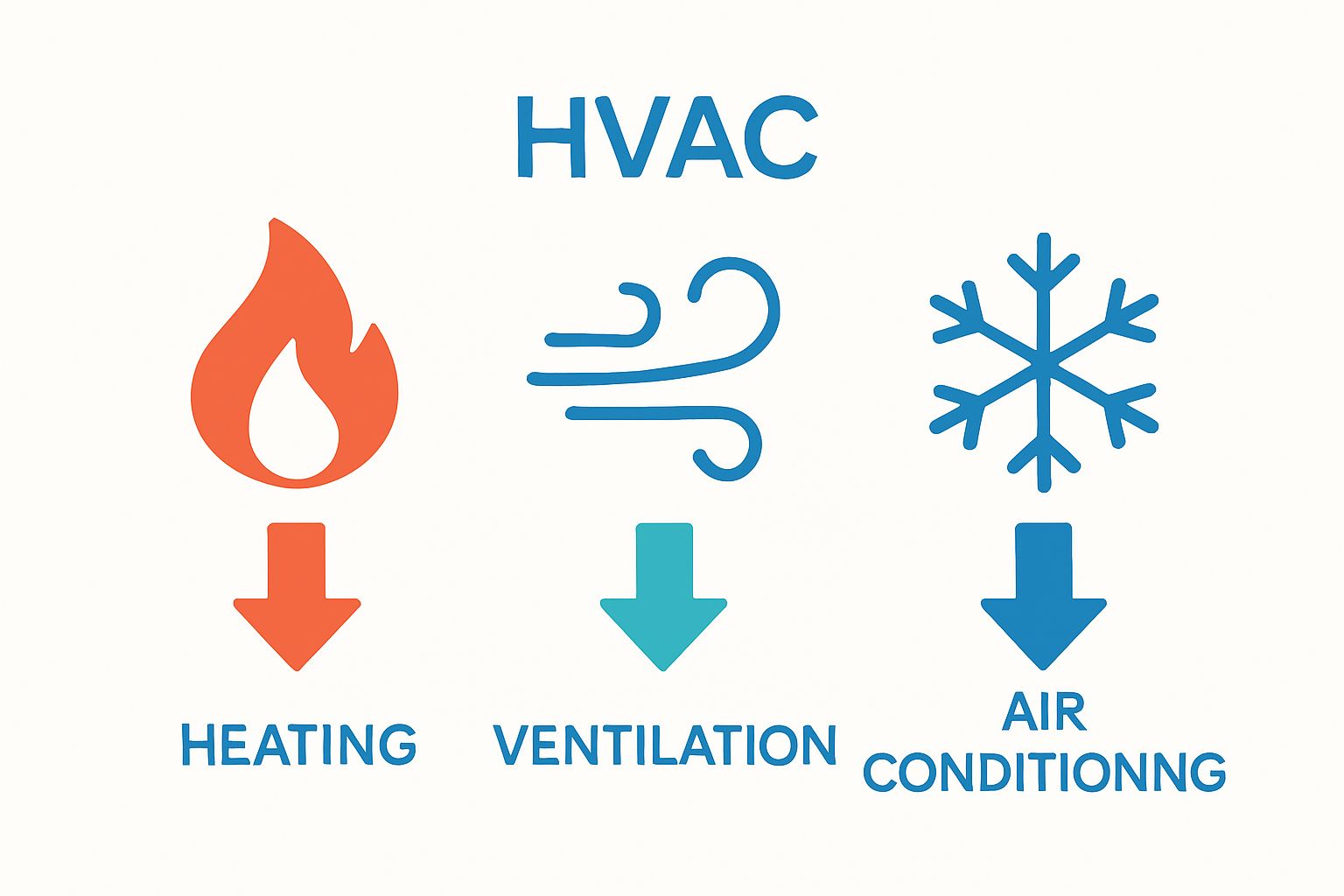
- Heating: Generates warmth during cold seasons using furnaces, heat pumps, or boilers
- Ventilation: Exchanges indoor and outdoor air to remove moisture, odors, and airborne contaminants
- Air Conditioning: Removes heat and humidity, cooling indoor spaces during warm months
How HVAC Systems Work
Modern HVAC systems operate through an interconnected network of equipment including thermostats, ductwork, compressors, and air handlers. These components collaborate to detect indoor temperature, adjust settings, and distribute conditioned air throughout a building. According to the U.S. Department of Energy, effective HVAC systems can significantly reduce energy consumption while maintaining optimal indoor comfort.
The system begins by sensing current room temperature through a thermostat, which triggers heating or cooling mechanisms to reach the desired temperature. Air is then drawn through return vents, filtered, and either heated or cooled before being redistributed through supply vents.
This continuous cycle maintains consistent environmental conditions, ensuring inhabitants remain comfortable regardless of external weather conditions.
The Importance of HVAC Systems in Modern Homes and Businesses
HVAC systems are far more than simple temperature control mechanisms; they are critical infrastructure that directly impacts health, productivity, comfort, and operational efficiency across residential and commercial environments
Health and Comfort Considerations
Indoor environmental quality significantly influences human well-being. Proper HVAC design ensures clean air circulation, regulates humidity, and minimizes airborne contaminants. According to American Society of Heating, Refrigerating and Air-Conditioning Engineers, well-maintained HVAC systems can:
- Reduce respiratory health risks
- Mitigate allergen and pollutant exposure
- Create consistent thermal comfort
- Prevent mold and moisture-related complications
Economic and Efficiency Impact
Beyond comfort, HVAC systems represent substantial economic investments. Modern systems deliver remarkable energy efficiency, translating to reduced operational costs. Strategic temperature management can lower energy consumption by up to 30%, providing significant financial benefits for homeowners and businesses alike.
Commercial settings particularly benefit from advanced HVAC technologies. Precise environmental control supports worker productivity, preserves sensitive equipment, and maintains optimal working conditions across diverse industries. From data centers requiring precise cooling to manufacturing facilities needing specific humidity levels, HVAC systems are fundamental to operational success.
How HVAC Works: The Science Behind Heating and Cooling
HVAC systems operate on fundamental principles of thermodynamics and heat transfer, utilizing complex yet elegant mechanisms to manage indoor environmental conditions.
Thermodynamic Principles of Heat Transfer
At its core, HVAC functionality revolves around three primary methods of heat transfer: conduction, convection, and radiation. According to the U.S. Department of Energy, these principles determine how thermal energy moves between different environments:
- Conduction: Heat transfer through direct contact between materials
- Convection: Heat movement through fluid or air circulation
- Radiation: Thermal energy transfer through electromagnetic waves
Heating and Cooling Mechanisms
Heating systems typically employ furnaces, heat pumps, or boilers to generate warmth. In cooling modes, air conditioning units use refrigeration cycles to remove heat from indoor spaces. Refrigerant plays a crucial role in this process, absorbing heat indoors and releasing it outside through a continuous compression and expansion cycle.
The system’s compressor pressurizes refrigerant, transforming it from a low-pressure gas to a high-pressure liquid. As it moves through the system, the refrigerant absorbs indoor heat and transfers it externally, effectively cooling the interior space. This intricate dance of thermal energy manipulation allows HVAC systems to maintain precise temperature and humidity levels, ensuring optimal comfort across changing environmental conditions.
While furnaces and central air remain common in many parts of the country, boilers and ductless mini splits are the systems most relevant to homes and businesses in the Plymouth and Cape Cod area — and the systems 8th Bend specializes in installing and servicing.
Boilers: A New England Heating Standard 
In much of New England, including many Plymouth and Cape Cod homes, heating runs through a boiler rather than a furnace. Instead of heating and pushing air through ductwork, a boiler heats water or produces steam and circulates it through radiators, baseboard units, or radiant floor systems to warm a space — a method known as hydronic heating. Boilers tend to deliver more even, consistent warmth than forced-air systems, since radiant heat doesn’t cycle on and off as abruptly or dry out indoor air the way furnaces can. They’re also common in older homes throughout the region, many of which were built around radiator systems long before central air ductwork became standard. 8th Bend Plumbing installs, repairs, and replaces boilers throughout the Plymouth area, including gas, oil, and electric systems, and can advise on whether repair or full replacement makes more sense for an aging unit.
Ductless Mini Splits: A Flexible Alternative to Traditional Ductwork
Not every home or business is built around a central duct system, and that’s where ductless mini splits come in. These systems pair an outdoor compressor with one or more indoor air-handling units, transferring heat directly between indoor and outdoor air without the energy losses that come from pushing conditioned air through long duct runs. That makes them a strong fit for additions, older homes with no existing ductwork, or spaces where installing traditional ducts isn’t practical — a common scenario in Plymouth and Cape Cod’s older housing stock. Because each indoor unit can be controlled independently, mini splits also allow room-by-room temperature control, so you’re not heating or cooling empty spaces. 8th Bend Plumbing installs and services ductless mini split systems throughout the Plymouth area, and if you’re weighing one against a central air upgrade, our breakdown of how ductless mini splits work covers the comparison in more depth.
Key Components of HVAC Systems and Their Roles
Each HVAC system comprises multiple interconnected components working together to manage indoor environmental conditions.
Primary Mechanical Components
- Thermostat: Acts as the system’s control center, monitoring and regulating temperature
- Furnace: Generates and distributes heated air throughout the building
- Heat Exchanger: Transfers thermal energy between different mediums
- Evaporator Coil: Absorbs heat from indoor air during cooling cycles
- Condenser: Releases absorbed heat to the external environment
Supporting Infrastructure
Ductwork serves as the circulatory system of traditional HVAC technology, enabling air movement throughout residential and commercial spaces. These intricate networks of metal or flexible tubes transport heated or cooled air from central units to individual rooms. Proper design and maintenance of ductwork are crucial for maintaining system efficiency, preventing air leakage, and ensuring consistent temperature distribution. Hydronic systems like boilers rely on a comparable network of piping rather than ductwork, and ductless mini-splits bypass both in favor of direct refrigerant lines between indoor and outdoor units.
Compressors and blower or circulator motors represent additional critical components that drive the entire system’s performance, whether that’s pressurizing refrigerant for heat transfer or circulating hot water through a boiler loop.
Common HVAC Issues and Maintenance for Longevity
HVAC systems, while sophisticated, are susceptible to various performance challenges that can compromise efficiency and comfort.
Recognizing Warning Signs
The table below outlines the most common HVAC warning signs and their likely implications, helping homeowners recognize maintenance needs early.
| Warning Sign | Likely Cause/Implication |
|---|---|
| Unusual noises | Mechanical problems or failing components |
| Inconsistent temperature | Issues with system balance or malfunction |
| Higher energy bills | Reduced efficiency, leaks, or system strain |
| Reduced airflow | Obstructed ducts, clogged filters, or blower issues |
| According to the U.S. Department of Energy, early detection of issues can prevent costly repairs and maintain system performance: |
Preventative Maintenance Strategies
Regular maintenance is crucial for HVAC system longevity and performance. Critical maintenance tasks include professional annual inspections, monthly air filter replacements (for forced-air systems), and keeping outdoor units clear of debris. Owners should schedule professional tune-ups before peak heating and cooling seasons to ensure optimal system efficiency.
Complex components like compressors, heat exchangers, circulator pumps, and refrigerant lines require specialized attention. Professional technicians can diagnose potential issues before they escalate, conduct thorough system cleaning, check electrical connections, and verify refrigerant or water pressure levels. These proactive measures not only extend system life but also maintain peak energy efficiency, potentially reducing long-term operational costs.
Transform Your Home Comfort with Trusted Local Boiler and Mini Split Solutions
Understanding how heating, cooling, and indoor air quality work together is important. If you are finding it hard to keep your indoor environment comfortable or have noticed uneven temperatures, higher energy bills, or poor air quality, you are not alone. These challenges can affect your health, your productivity, and even your peace of mind. Managing these systems requires both expert knowledge and dependable local service.
Why let discomfort take over your home or business? 8th Bend Plumbing Heating and Cooling specializes in boiler services and ductless mini split installation for Plymouth, MA, and nearby communities. Discover the power of professional boiler and mini split service designed to solve persistent problems and put your mind at ease. Reach out today to schedule a service or consultation and experience a noticeable improvement in your space.
Frequently Asked Questions
What are the main functions of HVAC systems?
HVAC systems serve three primary functions: heating, ventilation, and air conditioning. These functions work together to regulate indoor temperature, control humidity, and ensure fresh air circulation. Understanding these functions can help you make informed decisions about your heating and cooling needs.
How does an HVAC system maintain air quality?
An HVAC system improves air quality by ventilating and filtering indoor air to remove contaminants, moisture, and odors. To maintain good air quality, regularly change your air filters and schedule professional cleanings at least once a year.
What are common signs that my HVAC system needs maintenance?
Signs that your HVAC system may need maintenance include unusual noises, inconsistent temperatures, higher energy bills, and reduced airflow. If you notice any of these issues, take action by scheduling a professional inspection to identify and resolve potential problems quickly.
How can I improve the energy efficiency of my HVAC system?
You can enhance the energy efficiency of your HVAC system by ensuring regular maintenance, sealing ductwork, and using programmable thermostats. Consider scheduling annual tune-ups and evaluating your thermostat settings to potentially reduce your energy use by up to 30%.
What should I expect during a professional HVAC inspection?
During a professional HVAC inspection, a technician will check system components, clean critical parts, and evaluate the system’s overall performance. Prepare by clearing the area around your HVAC units and ensuring access for the technician, which helps them perform a thorough inspection.
How often should I change my HVAC filters?
It’s recommended to change your HVAC filters every 1 to 3 months, depending on use and air quality. Frequent replacements can help maintain airflow and enhance indoor air quality, so proactively check the filters each month and change them when they appear dirty.


