

Every year, unsafe gas line work leads to thousands of residential accidents nationwide. Gas systems bring reliable comfort and energy to homes and businesses, but even a small mistake can result in serious danger. Whether you are renovating or upgrading appliances, understanding what goes into proper gas line installation helps protect your property and your family. This guide breaks down the key steps, qualifications, and safety standards every property owner should know before starting any gas line project.
Table of Contents
- What Is Gas Line Installation?
- Licensed Plumber Requirements in Massachusetts
- Safety Standards and Local Legal Regulations
- Risks and Liabilities of Unlicensed Installation
- DIY vs. Professional Gas Line Installation
Key Takeaways
| Point | Details |
|---|---|
| Gas Line Installation Complexity | Professional gas line installation requires licensed expertise to ensure safety and compliance with strict local regulations. |
| Licensed Plumber Requirements | Aspiring plumbers in Massachusetts must complete significant apprenticeship hours and educational requirements to obtain licensure. |
| Legal and Safety Standards | Gas line installations are subject to rigorous legal standards to protect public health, requiring all work to be performed by licensed professionals. |
| Risks of DIY Installation | Attempting gas line installation as a DIY project poses severe safety risks and potential legal liabilities for homeowners. |
What Is Gas Line Installation?
Gas line installation is a specialized process that involves carefully routing and connecting fuel gas piping systems to power residential and commercial appliances. According to mass.gov, this critical service includes installing piping that delivers fuel gases to various appliances and accessories, while also managing vent piping for flue gases and makeup air.
The process is far more complex than simply connecting pipes. Licensed professionals must precisely design, measure, and install gas lines that meet strict safety standards and local building codes. In Massachusetts, regulations mandate that all gas fitting work—including installation, alteration, and repair of gas piping systems—must be performed by fully licensed technicians who understand the intricate safety requirements mass.gov.
Key components of professional gas line installation typically include:
- Precise pipe routing and connection
- Pressure testing to ensure system integrity
- Leak detection and safety verification
- Compliance with local and state building regulations
- Proper sizing and material selection for gas lines
Whether you’re installing a new gas stove, connecting a outdoor grill, or extending gas service to a heating system, professional gas fitting expertise ensures your property remains safe and your gas systems function efficiently. Understanding the complexity of this process underscores why licensed gas fitters are not just recommended—they’re essential for protecting your home and family.
Licensed Plumber Requirements in Massachusetts
Becoming a licensed plumber in Massachusetts involves a rigorous and structured pathway of professional development and technical education. mass.gov outlines specific requirements for aspiring plumbers, which include completing 8,000 hours of practical work experience as a licensed apprentice under the direct supervision of a master plumber, alongside 550 hours of comprehensive plumbing and gasfitting theory education spread over a minimum of four years.
The journey to becoming a professional plumber is divided into distinct stages. Initially, individuals must work as apprentices, gaining hands-on experience and technical knowledge. After completing the apprenticeship, professionals can apply to become journeyman plumbers. Subsequently, those seeking advanced certification can pursue master plumber status. According to mass.gov, master plumber applicants must demonstrate at least one year of experience as a licensed journeyman, complete 100 hours of advanced plumbing theory, and successfully pass a rigorous master plumber examination.
Key requirements for plumbing licensure in Massachusetts include:
- Minimum of 8,000 hours of supervised apprenticeship
- 550 hours of comprehensive plumbing and gasfitting education
- Passing required licensing examinations
- Continuing education to maintain licensure
- Adherence to state safety and professional standards
For those interested in understanding the professional progression, learning more about the role of a master plumber can provide deeper insights into the skills, responsibilities, and expertise required in this critical trade. Ultimately, these stringent requirements ensure that Massachusetts residents receive high-quality, safe, and professional plumbing services from thoroughly trained and certified professionals.
Safety Standards and Local Legal Regulations
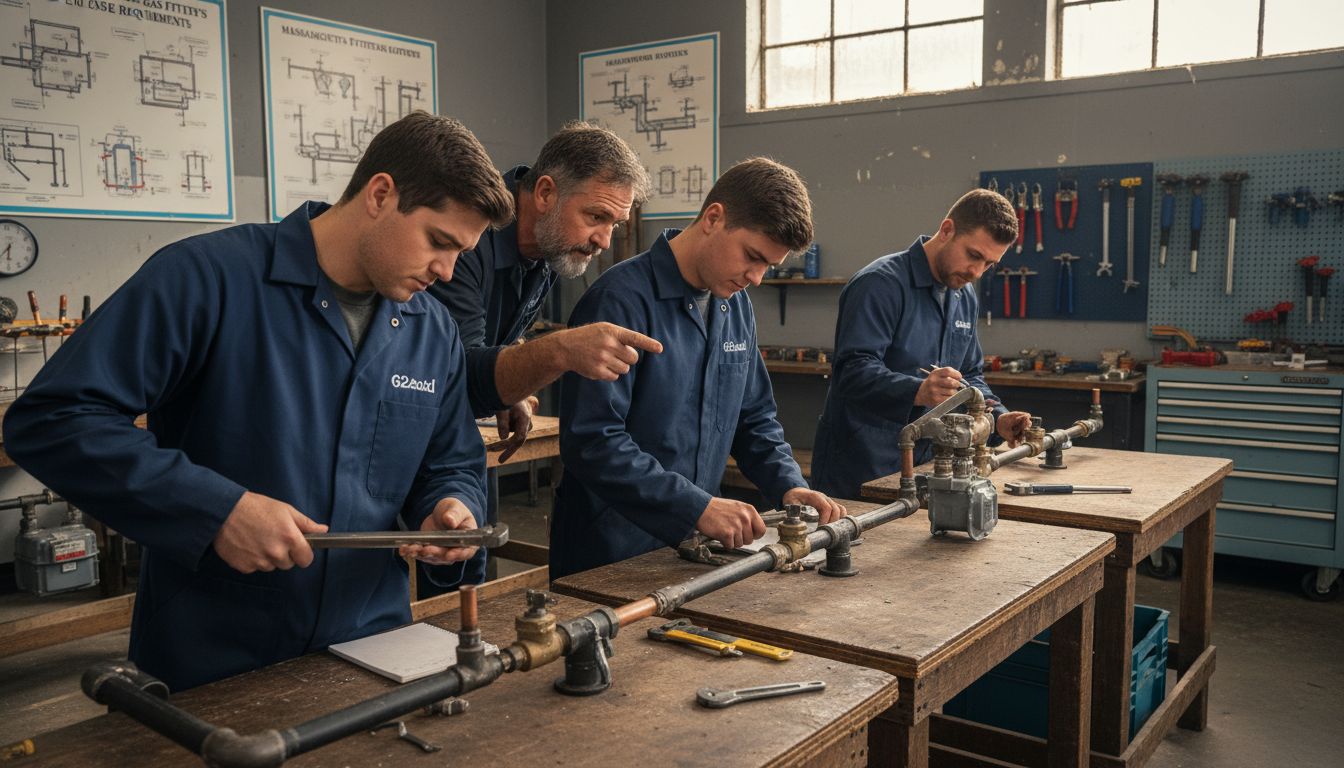
Gas line safety is not just a recommendation—it’s a critical legal requirement in Massachusetts. mass.gov outlines comprehensive regulations in 248 CMR that mandate strict safety standards for all gas fitting work, ensuring proper installation, maintenance, and inspection to protect public health and safety.
The legal framework surrounding gas line installation is comprehensive and strictly enforced. mass.gov highlights that the Board of State Examiners of Plumbers and Gas Fitters plays a crucial role in enforcing regulations, emphasizing that only licensed professionals can perform gas fitting work. This regulatory approach ensures that every gas line installation meets rigorous safety protocols, minimizing potential risks to homeowners and businesses.
Key safety and legal requirements include:
- Mandatory licensing for all gas fitting professionals
- Comprehensive inspection and testing protocols
- Strict adherence to state and local building codes
- Regular maintenance and safety verification
- Detailed documentation of all gas line installation work
Property owners seeking to understand the intricacies of professional standards can explore our guide on understanding industry standards in plumbing, which provides deeper insights into the complex world of gas line safety and legal compliance. By prioritizing these stringent safety measures, Massachusetts ensures that gas line installations protect both property and lives.
Risks and Liabilities of Unlicensed Installation
Gas line installations carry significant inherent risks when performed by unqualified individuals. mass.gov warns that unlicensed gas line work can lead to catastrophic safety hazards, including potentially fatal gas leaks, explosions, and carbon monoxide poisoning that pose substantial threats to public health and personal safety.
mass.gov emphasizes that Massachusetts law strictly prohibits unlicensed individuals from performing gas fitting work, with violations subject to serious legal penalties. These regulations aren’t bureaucratic formalities—they’re critical safeguards designed to protect homeowners from potentially life-threatening mistakes that can result from improper installation techniques, inadequate safety protocols, and lack of professional expertise.
Potential consequences of unlicensed gas line installation include:
- Immediate safety risks of gas leaks and potential explosions
- Voiding of home insurance policies
- Significant financial liability for property damage
- Potential legal prosecution
- Compromised home resale value
For homeowners seeking to understand the full scope of professional standards and minimize risks, our guide on understanding industry standards in plumbing offers comprehensive insights into the critical importance of professional, licensed gas line installation. Remember: when it comes to gas line work, cutting corners isn’t just a bad idea—it’s a potentially deadly mistake.
DIY vs. Professional Gas Line Installation
Gas line installation is not a typical home improvement project where DIY enthusiasm meets reality. mass.gov explicitly warns that Massachusetts law strictly requires gas line installations to be performed only by licensed professionals, underscoring the immense risks associated with amateur attempts. These aren’t just bureaucratic guidelines—they’re critical safety protocols designed to protect homeowners from potentially catastrophic consequences.
mass.gov emphasizes that gas fitting work demands specialized knowledge, precision, and compliance with rigorous safety standards. Professional technicians undergo extensive training to understand complex piping systems, pressure requirements, material compatibility, and intricate local building codes—skills that cannot be replicated through online tutorials or weekend workshops.
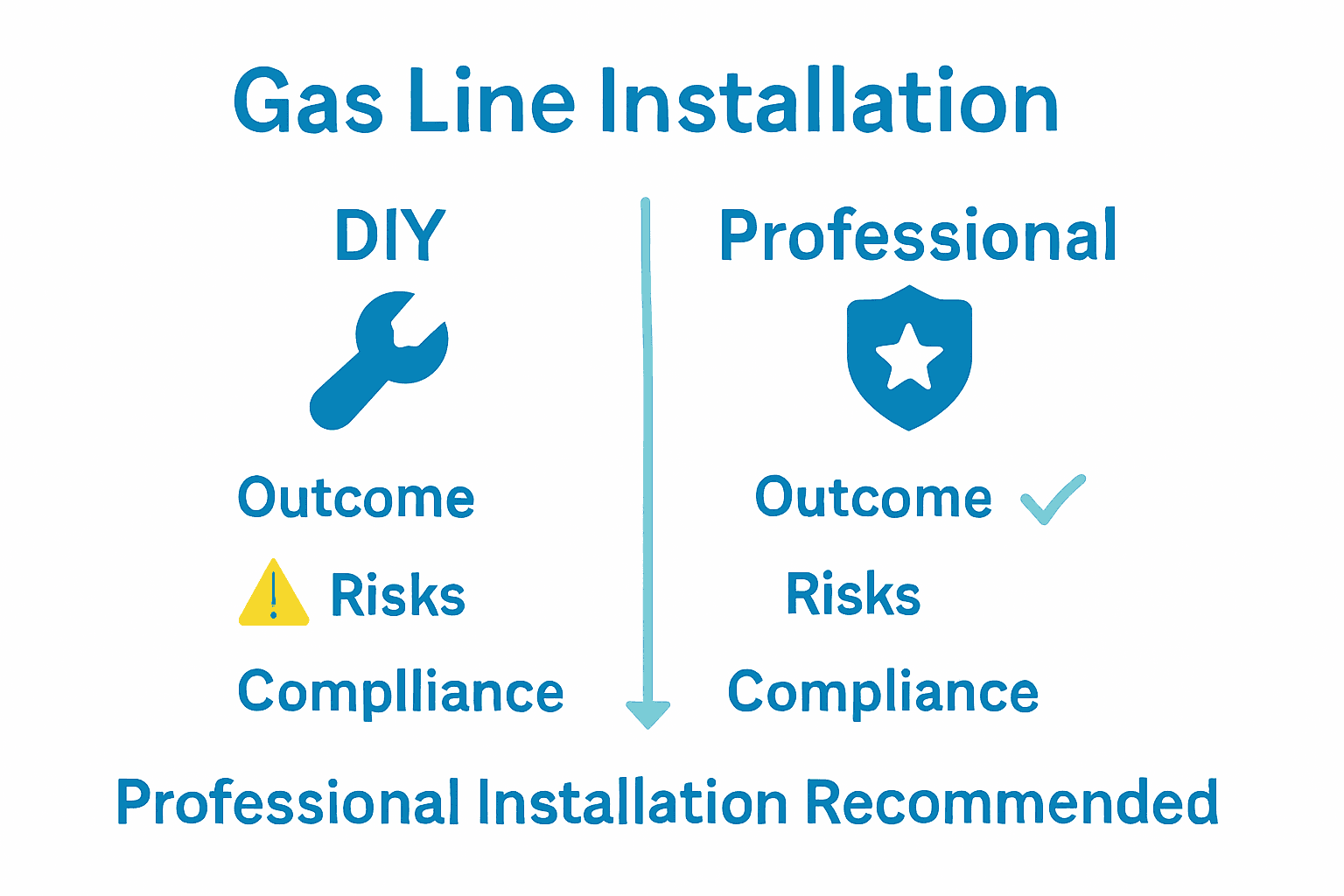
Key differences between DIY and professional gas line installation include:
Here’s a comparison of DIY and professional gas line installation:
| Feature | DIY Installation | Professional Installation |
|---|---|---|
| Legal Compliance | Not compliant | Fully compliant |
| Safety Training | None | Extensive and ongoing |
| Risk of Gas Leaks | High | Minimal |
| Insurance Coverage | Not covered | Fully insured |
| Building Code Knowledge | Lacking | Expert knowledge |
| Diagnostic Tools | Basic or absent | Advanced equipment |
| Liability Protection | Homeowner responsibility | Professional accountability |
- Professional expertise and comprehensive safety training
- Precise technical knowledge of gas system requirements
- Advanced diagnostic and leak detection capabilities
- Guaranteed compliance with state and local regulations
- Comprehensive insurance and liability protection
Homeowners looking to understand the nuances of professional installations can explore our gas piping service guide, which provides deeper insights into the complexities of safe gas line work. Remember: when it comes to gas line installations, professional expertise isn’t an option—it’s an absolute necessity.
Ensure Safety and Compliance with Expert Gas Line Installation
If you are navigating the complexities of gas line installation and need peace of mind that your system meets Massachusetts’ strict safety and licensing standards, professional help is essential. The risks of unlicensed work include serious hazards like gas leaks, explosions, and costly liabilities. Our team at 8th Bend Plumbing understands the importance of licensed, expert gas fitting and follows all local codes to protect your home or business.

Take control of your safety today by choosing trusted professionals who bring extensive training, precise craftsmanship, and full compliance. Whether you need gas line installation, repair, or inspection, our experts deliver reliable service backed by integrity and transparency. Learn more about our dedicated plumbing company services and secure your investment with professional gas fitting at 8th Bend Plumbing. Don’t wait until a small problem becomes a dangerous emergency. Contact us now and experience the confidence of licensed gas line solutions.
Frequently Asked Questions
What is involved in the gas line installation process?
Gas line installation includes precise pipe routing and connection, pressure testing, leak detection, and ensuring compliance with local and state building regulations. Licensed professionals must also select the proper sizing and materials for the gas lines.
Why is it important to hire a licensed professional for gas line installation?
Hiring a licensed professional ensures that the installation meets strict safety standards and local building codes, minimizing risks like gas leaks or explosions. Licensed technicians have the necessary training and expertise to perform the work safely and effectively.
What are the risks of unlicensed gas line installations?
Unlicensed gas line installations can lead to severe safety hazards, including gas leaks, explosions, and carbon monoxide poisoning. Additionally, unlicensed work can void home insurance policies and expose homeowners to significant legal and financial liabilities.
What should homeowners consider before installing a gas line?
Homeowners should consider the complexity of gas line installations, the importance of hiring licensed professionals, compliance with local regulations, and the potential risks associated with DIY efforts. Understanding industry standards and safety measures is crucial for any gas line work.
Recommended
- Understanding Why Use Licensed Gas Fitters for Safety – 8th Bend Plumbing Heating and Cooling
- What is Gas Fitting? Understanding Its Importance and Functions – 8th Bend Plumbing Heating and Cooling
- Understanding the Role of a Master Plumber – 8th Bend Plumbing Heating and Cooling
- Plymouth, MA Gas Piping Service | Gas Line Installation & Inspection


