

New England winters don’t ease you in gently. In Plymouth, MA, temperatures can plunge below freezing for weeks at a time, and when your heating system fails, you feel it fast. Yet many homeowners and small business owners aren’t sure who to call, what to ask, or what to expect once someone shows up. A heating contractor is your first line of defense against the cold, but the role is often misunderstood. This article walks you through what heating contractors do, which services matter most, how to choose the right one, and exactly what the process looks like from your first phone call to a warm, comfortable building.
Key Takeaways
| Point | Details |
|---|---|
| Full-service expertise | Heating contractors in Plymouth handle installation, repair, and ongoing maintenance for all major home systems. |
| Local trust matters | Choosing a local contractor brings faster response, better code compliance, and long-term support. |
| Smart selection process | Ask for licenses, compare credentials, and insist on transparent quotes for best results. |
| Proactive maintenance | Annual checkups prevent costly breakdowns and ensure safe, reliable home comfort year-round. |
What Does a Heating Contractor Do?
Now that you know why heating services matter, let’s clarify exactly what heating contractors do for Plymouth homes and businesses.
A heating contractor is a licensed professional who specializes in the installation, repair, and maintenance of heating systems. This is not the same as a general handyman or even a basic plumber, though some contractors handle both. Heating contractors carry specific training and certifications that allow them to work safely with gas lines, electrical components, and complex mechanical systems. Many homeowners assume they only need a contractor when something breaks, but the role goes much further than emergency repairs.
Heating contractors install, repair, and maintain all types of heating systems, including boilers, furnaces, and heat pumps. That covers a wide range of equipment you might have in your home or commercial space. Here’s a breakdown of what a qualified contractor typically handles:
- Furnace installation and repair: Gas and electric furnaces are the most common heating systems in Plymouth homes. Contractors size, install, and service them correctly.
- Boiler services: Boilers heat water and distribute warmth through radiators or radiant floor systems. Boiler troubleshooting requires specialized knowledge of pressure, valves, and water chemistry.
- Heat pump installation: Heat pumps are growing in popularity because they provide both heating and cooling. Contractors handle refrigerant lines and electrical connections.
- HVAC systems: Heating, ventilation, and air conditioning systems require integrated expertise that covers airflow, ductwork, and temperature control.
- Gas fitting: Any work involving natural gas lines must be done by a licensed professional to meet Massachusetts safety codes.
- Emergency heating service: When a system fails at 2 a.m. in January, a reliable contractor responds quickly.
Plymouth winters are not forgiving. The town sits on the coast, which means wind chill can make temperatures feel significantly colder than the thermometer shows. Local building codes also reflect these conditions, requiring heating systems to meet specific efficiency and safety standards. A contractor who works regularly in Plymouth understands these requirements without needing to look them up.
Pro Tip: Always ask your contractor about their emergency response times before winter arrives. A contractor who can reach you within a few hours during a cold snap is worth far more than one who books appointments a week out.
Good heating system maintenance is the foundation of reliable comfort. When you work with a contractor who knows your system and your home, you’re not just buying a repair. You’re investing in a relationship that keeps you warm season after season.
Essential Services Offered by Plymouth Heating Contractors
Understanding what a heating contractor does sets the stage for knowing what services to expect when you call for help.
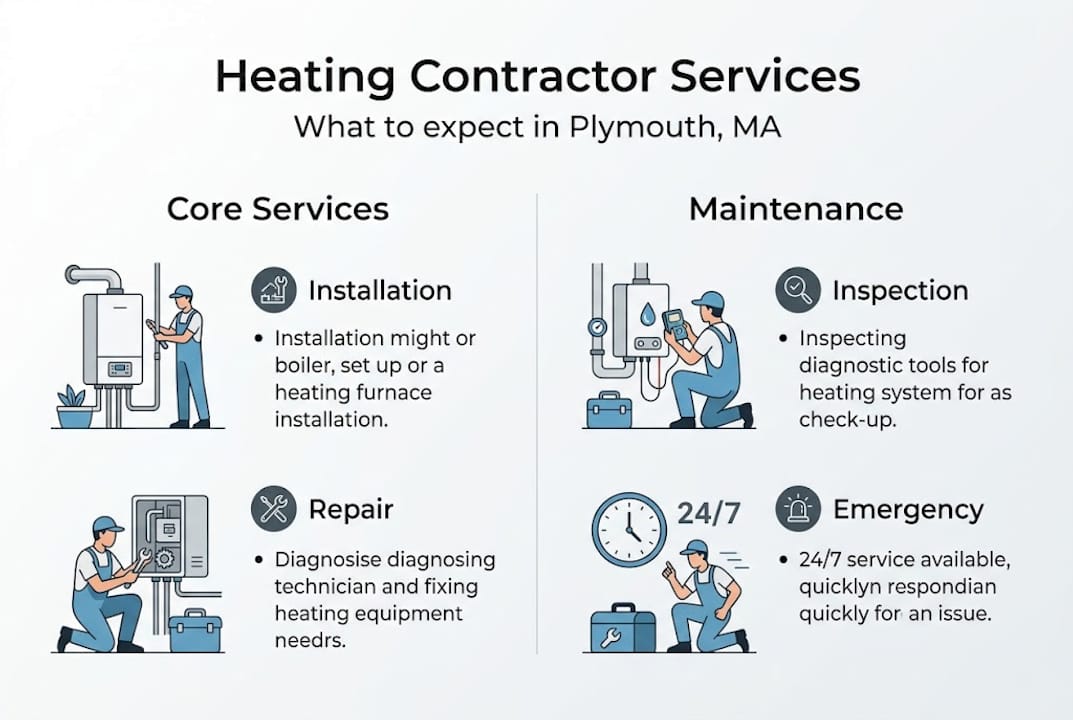
Heating contractors provide a range of services, including system troubleshooting, annual inspections, and emergency repairs. Knowing what’s available helps you ask the right questions and avoid being caught off guard when something goes wrong.
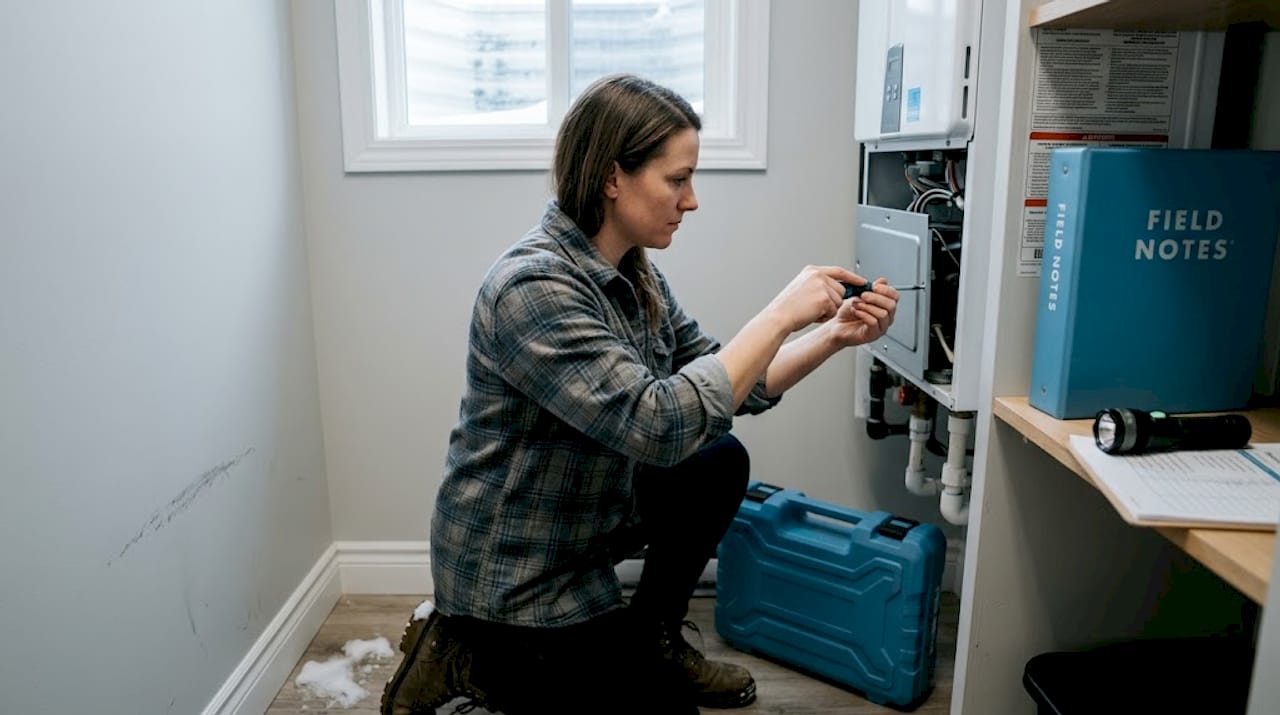
Here’s a quick overview of the core services you should expect from a qualified Plymouth heating contractor:
| Service | What it includes | Why it matters |
|---|---|---|
| System installation | Sizing, equipment selection, full setup | Correct sizing prevents efficiency loss |
| Diagnostic troubleshooting | Error code reading, component testing | Identifies problems before they worsen |
| Annual maintenance inspection | Filter checks, burner cleaning, safety tests | Extends system life and reduces bills |
| Emergency repairs | Same-day or after-hours response | Restores heat during dangerous cold |
| System upgrades | Replacing outdated equipment | Improves efficiency and reliability |
Each of these services follows a logical process. When you call for a diagnostic, for example, the contractor doesn’t just guess. They follow a structured approach:
- Initial assessment: The technician reviews your system’s age, make, and model, then asks about symptoms you’ve noticed.
- Visual inspection: They check for visible damage, corrosion, leaks, or blocked vents.
- Component testing: Using diagnostic tools, they test ignition, heat exchangers, pressure levels, and electrical connections.
- Error code reading: Modern systems store fault codes that point directly to the problem.
- Repair or recommendation: The contractor explains what they found, what it costs to fix, and whether a repair or replacement makes more sense.
Professional inspections aren’t just about keeping things running. They’re about safety. A cracked heat exchanger in a furnace, for example, can leak carbon monoxide into your living space without any visible warning. Only a trained technician with the right tools can catch that during a routine check.
Warning sign many homeowners miss: A yellow or orange burner flame instead of a steady blue flame often signals a combustion problem that needs immediate attention. Most people never look at their burner, so this warning goes unnoticed for months.
The boiler maintenance checklist for your specific system will vary, but the principle is the same across all equipment: regular attention prevents expensive surprises. And when you understand HVAC heating systems more broadly, you’ll see that each component depends on the others working correctly.
Pro Tip: Schedule your annual heating inspection in early fall, before demand spikes. Contractors are less busy in September and October, which means faster scheduling and more thorough attention to your system.
How to Choose the Right Heating Contractor in Plymouth, MA
Once you’re aware of the services you’ll need, here’s how to ensure you pick the right heating expert for your property.
Not all contractors are equal, and the difference between a good hire and a bad one can mean the difference between a warm home and a costly mistake. When selecting a heating contractor, review credentials, check local reputation, and ask about licensing and insurance. These aren’t optional steps. They’re the baseline.
Here’s a comparison that helps clarify why local matters:
| Factor | Local Plymouth contractor | Out-of-area contractor |
|---|---|---|
| Response time | Often same-day or next-day | May take days to schedule |
| Code knowledge | Familiar with MA and local codes | May need to research requirements |
| Local references | Can provide nearby customer contacts | References may be from other regions |
| Accountability | Has a community reputation to protect | Less invested in local standing |
| Follow-up support | Easy to reach for follow-up visits | May not service your area again |
When you’re vetting a contractor, ask these questions directly:
- Are you licensed in Massachusetts? Every heating contractor working on gas systems in MA must hold a valid license. Ask for the license number and verify it.
- Do you carry liability insurance and workers’ compensation? This protects you if something goes wrong during the job.
- Can you provide local references? A contractor with happy customers in Plymouth should be able to name a few.
- Do you offer written estimates? Verbal quotes leave too much room for misunderstanding. Always get it in writing.
- What’s your emergency response policy? Heating emergencies don’t wait for business hours.
Here’s a quick checklist to use when making your final decision:
- License verified with the state
- Insurance confirmed in writing
- Written estimate received
- Local references checked
- Clear communication from the first call
- Transparent pricing with no vague line items
- Willingness to explain the work in plain language
One of the biggest pitfalls homeowners fall into is hiring an unlicensed technician to save money upfront. This often leads to code violations, voided equipment warranties, and repairs that don’t hold. The residential plumbing workflow follows similar principles. A professional who communicates clearly and documents everything is protecting you as much as they’re protecting themselves.
Transparent pricing is non-negotiable. You should never feel pressured or confused about what you’re paying for. A trustworthy contractor explains every line item and welcomes your questions.
The Heating Contractor Process: What to Expect From First Call to Completion
After choosing your contractor, here’s what the typical service experience looks like in Plymouth.
One of the most common sources of anxiety for homeowners is not knowing what happens next. When you understand the process, you can participate in it confidently and catch anything that doesn’t seem right. A reliable heating contractor will provide an initial assessment, offer written estimates, outline timelines, and communicate status throughout the service.
Here’s what a professional service experience looks like from start to finish:
- First call: You describe the problem or request a service. A good contractor asks clarifying questions about your system type, age, and symptoms. They give you a realistic timeframe for arrival and explain what to expect.
- On-site assessment: The technician arrives, introduces themselves, and does a thorough walkthrough of your heating system. They don’t jump straight to repairs. They diagnose first.
- Written estimate: Before any work begins, you receive a written quote that breaks down labor, parts, and any additional costs. This is your opportunity to ask questions and compare if needed.
- Work phase: The contractor carries out the repair, installation, or maintenance according to the agreed scope. They keep disruption to your home or business to a minimum and clean up after themselves.
- Final inspection and test: Once the work is complete, the contractor tests the system to confirm everything operates correctly. They walk you through what was done and why.
- Documentation and follow-up: You receive a record of the work completed, any parts replaced, and recommendations for future maintenance. A good contractor follows up to confirm you’re satisfied.
Local contractors handle emergencies with a different level of urgency than large national chains. When a Plymouth homeowner calls at midnight in February because their boiler stopped working, a local contractor understands what that means. They know the roads, they know the neighborhoods, and they know the stakes.
Pro Tip: Request that all estimates and any changes to the scope of work be documented in writing before the work continues. This protects you from unexpected charges and keeps both parties accountable.
Communication matters throughout the entire process. You should never feel like you’re waiting in the dark for news about your own home. A contractor who updates you at each stage, explains their findings in plain language, and invites your questions is one worth keeping. For a broader look at what to expect from combined services, the 8th Bend Plumbing blog covers both heating and plumbing workflows in detail.
Our Perspective: Don’t Underestimate the Value of Local Expertise
Reflecting on these practical steps, it’s clear that who you choose isn’t just about skill. It’s about trust.
We’ve seen it play out many times. A homeowner calls a national company because the name feels safe and familiar. The technician who shows up has never worked in Plymouth before. They don’t know that the older homes near the waterfront often have radiant heating systems that require a different approach. They don’t know the local code nuances that affect gas line work in this area. The job gets done, but it takes longer, costs more, and leaves the homeowner with lingering doubts.
Local contractors carry something that no national brand can replicate: accountability rooted in community. When we service your home, we know we might see you at the hardware store or hear about your experience through a neighbor. That keeps us honest in a way that a call center never could.
The conventional wisdom that a bigger company means better service is simply not true for heating work. Smaller, local teams respond faster, know the regional systems better, and build genuine relationships with their customers. Heating maintenance insights show that consistent, relationship-based service leads to better long-term outcomes for your system and your budget. When a real emergency hits in the middle of a January cold snap, local expertise isn’t a nice-to-have. It’s everything.
Need a Reliable Heating Contractor in Plymouth, MA?
If you’re ready to experience the difference a dedicated team can make, here’s how to get started.
At 8th Bend Plumbing, Heating, and Cooling, we serve Plymouth and the surrounding areas with fast response times, honest pricing, and technicians who know this region inside and out. Whether you need heating system troubleshooting after an unexpected breakdown or a full system installation before winter, we’re ready to help.

We also offer a full range of plumbing system designs and HVAC services, so you don’t need to manage multiple contractors for different problems. One trusted team, one point of contact, and one standard of service you can count on. Visit 8th Bend Plumbing to book online, explore our services, or reach out directly. We’re here when you need us.
Frequently Asked Questions
What are the signs I need to call a heating contractor?
Strange operation and inconsistent heating are warning signs that need professional attention. Rising energy bills, unusual noises, or a system that simply won’t start are all signals to call a licensed contractor right away.
How often should my heating system be inspected?
Annual heating system checks can prevent breakdowns and are recommended by most manufacturers and safety authorities. A licensed contractor should inspect your system every fall before the heating season begins.
Can heating contractors also handle plumbing issues?
Many firms provide combined plumbing and heating services, making it easy to address multiple home systems with one trusted provider. This is especially convenient for older Plymouth homes where plumbing and heating systems are closely connected.
Are emergency heating repairs available in Plymouth, MA?
Yes, reputable local contractors offer urgent repair services for home heating issues, including after-hours and weekend calls. When temperatures drop fast, you shouldn’t have to wait until Monday morning for help.


