

Most Plymouth homeowners assume that upgrading their heating and cooling system means tearing into walls and running ductwork throughout the house. That assumption stops a lot of people from making a change they’d genuinely benefit from. Ductless mini-splits (systems with an outdoor compressor unit connected to one or more indoor air handlers) require no ductwork. They’re especially practical in Plymouth’s older and historic homes, where adding ducts would mean major construction. This guide walks you through the installation process, local permit requirements, real cost expectations, and how to choose the right installer so you can make a confident, informed decision.
Key Takeaways
| Point | Details |
|---|---|
| Homeowner-friendly solution | Ductless mini splits are ideal for historic Plymouth homes and require no existing ductwork. |
| Permits and codes matter | Electrical, mechanical, and building permits are required and usually managed by professionals. |
| Choose certified installers | Select Mass Save HPIN contractors to access local rebates and ensure code compliance. |
| Maximize efficiency | Selecting the right system and provider can optimize performance through New England winters. |
Why Choose a Ductless Mini-Split in Plymouth, MA
With that context in mind, let’s explore why mini-splits have become so popular among local homeowners.
Mini splits are highly efficient for both heating and cooling. Unlike traditional forced-air systems that lose energy through leaky ducts, mini-splits deliver conditioned air directly to each room. That means less wasted energy and lower monthly bills. For Plymouth homeowners, that efficiency adds up quickly given the region’s cold winters and warm, humid summers.
One of the biggest advantages of this area is how well mini-splits work in older homes. Plymouth has no shortage of colonial-era and Victorian-style properties where retrofitting ductwork isn’t realistic. A Plymouth ductless mini split installation only requires a small hole in the wall for the refrigerant line, power cable, and condensate drain. That’s far less invasive than installing full duct systems.
Here’s what makes mini splits especially well-suited for Plymouth homes:
- No ductwork required: Perfect for older homes, additions, sunrooms, or converted attics
- Cold-climate heating: Modern cold-climate models from brands like Mitsubishi operate efficiently even when temperatures fall below 0°F, which matters a lot during a Massachusetts winter
- Zoning control: Each indoor unit operates independently, so you can heat or cool one room without wasting energy on unused spaces
- Quiet operation: Indoor units are significantly quieter than window AC units or forced-air systems
- Year-round use: One system handles both heating in winter and cooling in summer
When it comes to local providers, 8th Bend Plumbing, Heating, and Cooling is a trusted option for homeowners considering a switch to a ductless mini split system.
Worth noting: Rebates are available through Mass Save, but only when your installer is a Heat Pump Installation Network (HPIN) certified contractor. Always verify HPIN status before signing a contract.
Pro Tip: Use the zoning capability strategically. If you have a home office you use during the day and a bedroom you only use at night, you can set each zone to operate on a schedule and avoid heating or cooling empty rooms.
Understanding the Installation Process
Knowing why a mini split could benefit your home, it’s important to understand exactly what goes into getting one installed.
The process is more straightforward than most homeowners expect, but it does require licensed professionals for several critical steps. Here’s a typical installation sequence for a Plymouth home:
- Site assessment: A qualified installer evaluates your home’s layout, insulation, electrical panel capacity, and the best locations for both indoor and outdoor units.
- Indoor unit placement: The air handler is mounted on an interior wall, usually high up for better airflow distribution.
- Outdoor unit placement: The condenser is positioned outside on a flat surface or wall bracket, with clear space around it for airflow.
- Line set installation: A small hole (typically 3 inches) is drilled through the exterior wall to route the refrigerant lines, electrical wiring, and condensate drain.
- Electrical connection: The system is wired to your home’s electrical panel. This step requires a licensed electrician and is subject to code inspection.
- Refrigerant charging: A certified HVAC technician handles refrigerant lines. This is not a DIY task. Handling refrigerants without EPA Section 608 certification is illegal.
- System commissioning: The installer tests the full system, checks for leaks, confirms thermostat or remote operation, and verifies heating and cooling performance.
In Plymouth, permits are required for mini-split installations in 1 and 2-family dwellings under the Massachusetts state building codes. You’ll need to contact the Plymouth Building Department before work begins. Inspections cover both electrical and mechanical work, and skipping this step can create problems when you sell your home.
If you’re weighing DIY options, know that you can handle cosmetic prep work and minor tasks. However, refrigerant handling, electrical wiring, and permit filing must go through licensed professionals. Pairing your mini split project with a licensed gas plumber is smart if you’re also upgrading heating equipment at the same time.
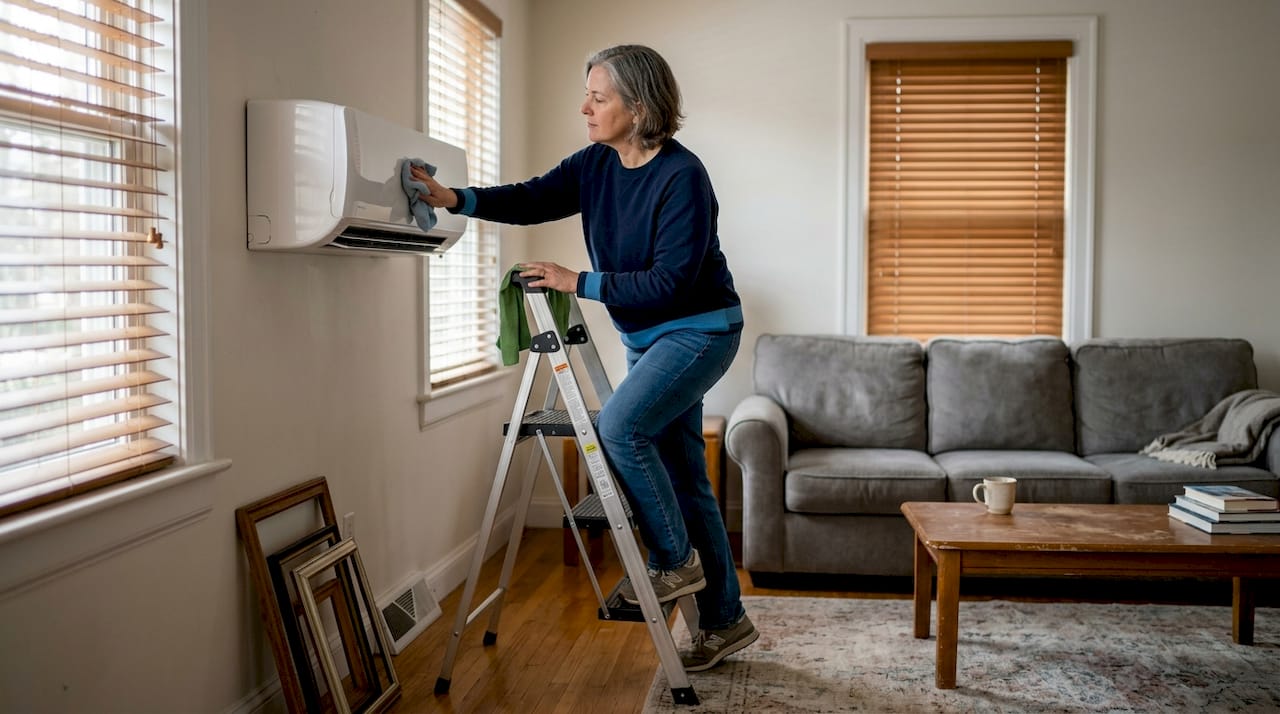
Pro Tip: Schedule your installation in the spring or early fall. Summer and winter are peak demand seasons for HVAC contractors in Plymouth. Booking off-peak means faster scheduling, sometimes lower pricing, and more attention from your installer.
Permits, Codes, and Cost: What Every Plymouth Homeowner Needs to Know
Once you know what to expect from the installation steps, you’ll want to get clear on the paperwork and costs required by local regulations.
In Massachusetts, mini split installations in 1 and 2-family homes require electrical and mechanical permits filed with your local building department. Permit fees in Plymouth typically range from $50 to $600, depending on the scope of work. That fee covers inspections for both electrical and mechanical systems.
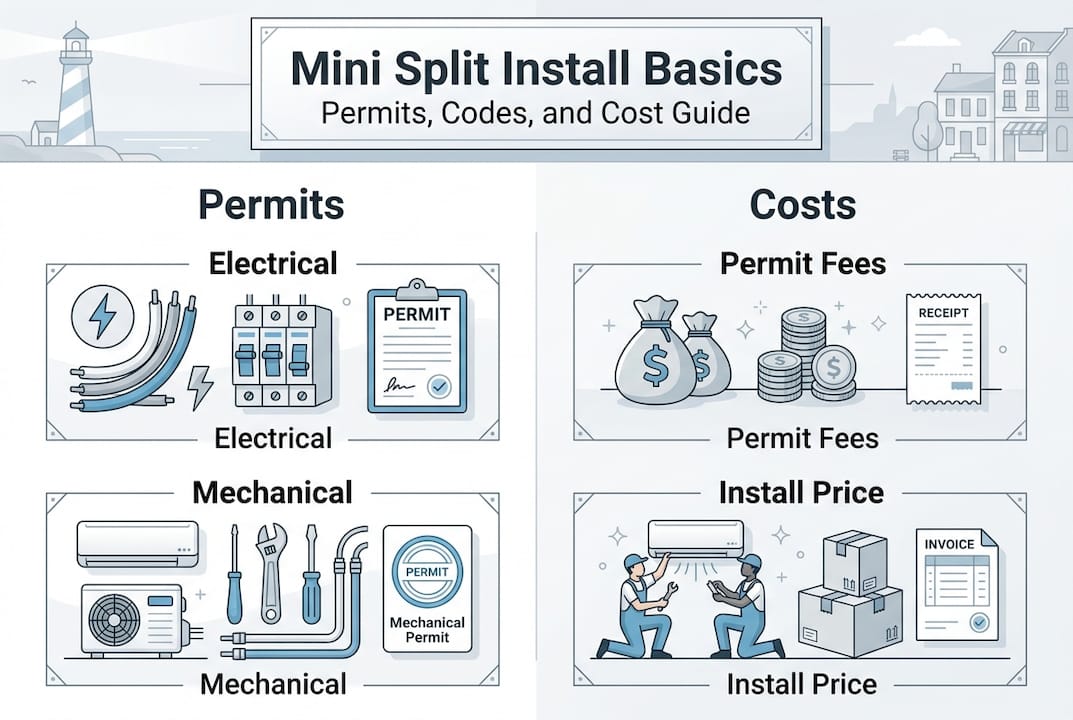
| Permit type | Who files it | Typical cost range |
|---|---|---|
| Building permit | Contractor or homeowner | $50 to $200 |
| Electrical permit | Licensed electrician | $75 to $250 |
| Mechanical permit | HVAC contractor | $50 to $200 |
Most licensed contractors handle all permit filings as part of their service. That’s a genuine benefit because errors in permit applications can delay your project by weeks. DIY permit filing is allowed in some cases, but the risk of a code violation or failed inspection falls entirely on you.
Here’s what you should prepare and ask about before any work begins:
- Proof of contractor licensing and insurance: Verify both before signing anything
- Permit inclusion in the quote: Ask explicitly whether permit fees are included or billed separately
- Inspection timeline: Find out how long inspections typically take in Plymouth so you can plan
- System sizing documentation: Your contractor should perform a Manual J load calculation (a heat load analysis) to verify the system is the right size for your space
- Warranty details: Understand what’s covered by the equipment warranty versus the labor warranty
For a single-zone system (one indoor unit), total installed costs in Plymouth generally fall between $3,000 and $5,500, including permits. Multi-zone systems (two or more indoor units) typically range from $6,000 to $12,000 or more. These figures can shift based on the brand, installation complexity, and whether electrical panel upgrades are needed. You can also check generator permit fees as a reference for how Plymouth handles similar mechanical permits.
Understanding these numbers up front saves you from surprises. Get at least two written quotes before committing.
Selecting the Right Installer and Maximizing Rebates
Having covered permits and compliance, the final piece is selecting a trustworthy installer and boosting your potential savings.
Choosing the right installer is one of the most important decisions you’ll make. A good installer affects system performance, rebate eligibility, and long-term reliability. Here’s what to look for:
- Licensed and insured in Massachusetts
- Manufacturer-certified for the brand they install
- Mass Save HPIN certified (required for rebate eligibility)
- Willing to provide written quotes and permit documentation
- Strong local reviews and references
Using a Mass Save HPIN-certified contractor is especially important if you plan to apply for rebates. Mass Save rebates for cold-climate heat pumps can reach $10,000 or more, depending on your home’s size and existing heating system. That’s not money you want to leave on the table by hiring a contractor who doesn’t qualify.
| Provider | Specialty | HPIN certified | Service area |
|---|---|---|---|
| RCA Electric | Mitsubishi mini splits | Verify directly | Plymouth, MA |
| Beantown Home Services | HVAC, heat pumps | Verify directly | Greater Boston, South Shore |
| 8th Bend Plumbing | HVAC, plumbing, gas | Yes | Plymouth and surrounding areas |
Here’s how to maximize your rebate:
- Schedule a Mass Save energy assessment before installation. This is free and often required for rebate qualification.
- Confirm your contractor is HPIN listed on the Mass Save website before signing a contract.
- Choose a cold-climate model rated for sub-zero operation to qualify for the highest rebate tiers.
- Keep all documentation, including invoices, permits, and inspection reports. You’ll need these for rebate applications.
- Submit your rebate application promptly after installation. Delays can sometimes affect eligibility.
Pro Tip: Ask your installer about ongoing maintenance agreements. Annual tune-ups keep your system running efficiently and protect the manufacturer’s warranty. Many providers offer service plans that pay for themselves in avoided repairs. You can also explore the mini split provider guide for more context on what to expect from quality local installers.
The Truth About Ductless Mini-Splits in Plymouth: What Most Guides Miss
With the key facts in hand, it’s worth pausing to consider what standard advice often overlooks.
Most installation guides give you a checklist and call it done. What they skip is the local nuance that actually determines whether your project goes smoothly or becomes a headache.
Plymouth’s historic homes present layout challenges that standard mini split installations don’t account for. Exterior wall thickness, unconventional framing, and limited attic access all affect where line sets can be routed. An installer who has only worked on newer construction may underestimate this complexity and quote you a price that changes once they’re on-site.
The Mass Save rebate process is also more involved than most people realize. Applying without proper documentation or working with a contractor who isn’t HPIN certified can result in a denied application. We’ve seen homeowners lose thousands in rebates simply because they didn’t verify contractor status upfront. Real homeowner experiences in Plymouth confirm that choosing the right provider from the start makes all the difference.
System sizing is another area where shortcuts create long-term problems. An oversized unit short-cycles (turns on and off too frequently), which reduces efficiency and wears out components faster. An undersized unit runs constantly and still can’t keep up on the coldest days. Neither scenario is acceptable, and both can be avoided with a proper load calculation before installation.
Get Started With the Experts at 8th Bend Plumbing
Ready to put this information to work for your home?
At 8th Bend Plumbing, we serve Plymouth and the surrounding South Shore communities with honest, reliable HVAC and plumbing services. Our team handles ductless mini split installations from start to finish, including permits, inspections, and rebate paperwork. We take the guesswork out of compliance so you can focus on enjoying a more comfortable home.

Whether you’re new to what HVAC systems involve or you already know you want a mini split, we’re here to help you make the right choice. Learn more about heating system options or reach out today to schedule your consultation. We’ll walk you through every step with no pressure and no surprises.
Frequently Asked Questions
Do I need a permit to install a ductless mini split in Plymouth, MA?
Yes. Plymouth requires permits for the electrical and mechanical work involved in a mini split installation, and most licensed contractors handle the filing on your behalf.
Are ductless mini-splits effective in Massachusetts winters?
Absolutely. Cold-climate models operate efficiently even when outdoor temperatures drop below 0°F, making them a practical year-round heating solution for Plymouth homes.
Can I install a ductless mini split myself or should I hire a pro?
Professional installation is strongly recommended. Permits, refrigerant handling, and Mass Save HPIN rebate eligibility all require licensed contractors to do the work correctly.
How much do permits cost for a ductless mini split installation?
Permit fees in Plymouth range from $50 to $600, depending on the type and scope of work involved, covering building, electrical, and mechanical permits.


