

Your boiler quietly heats your home through every cold Plymouth winter, and most homeowners never give it a second thought until something goes wrong. That’s a costly gamble. Skipping annual maintenance doesn’t just risk an unexpected breakdown on the coldest night of the year; it can create genuine safety hazards like carbon monoxide leaks and pressure failures. Boiler service explained describes boiler servicing as an annual professional inspection and maintenance process carried out by licensed technicians to ensure safety, efficiency, and longevity. This guide walks you through everything you need to know, from what a service actually involves to why Plymouth homeowners in particular benefit from staying on schedule.
Key Takeaways
| Point | Details |
|---|---|
| Annual check is essential | A licensed technician should service your boiler every year for safety and efficiency. |
| Servicing prevents breakdowns | Regular maintenance catches small issues before they become costly emergencies. |
| Boosts efficiency | Clean, well-tuned boilers use less energy and deliver more reliable heating. |
| Local expertise matters | Choosing technicians familiar with Plymouth’s conditions protects your home best. |
What is Boiler Servicing and Why is it Important?
Many homeowners picture boiler servicing as a quick glance under the hood. In reality, it’s a structured, professional process that covers safety, performance, and long-term reliability. Understanding the boiler service basics helps you know what you’re paying for and why it matters.
As the boiler service explained, a proper service is an annual professional inspection and maintenance of residential boilers by licensed technicians to ensure safety, efficiency, and longevity. During a visit, a qualified technician will:
- Inspect the heat exchanger for cracks or corrosion
- Check and clean the burner assembly
- Test the flue and ventilation systems for safe gas exhaust
- Verify pressure levels and expansion tank function
- Inspect all safety controls and relief valves
- Look for signs of leaks around seals and connections
- Confirm the thermostat and controls are responding correctly
The outcomes of this process are real and measurable. A well-serviced boiler runs more efficiently, meaning lower fuel bills. It’s far less likely to break down mid-January. And it lasts longer, often adding years to the equipment’s lifespan.
“Skipping a single year of maintenance might seem like a money-saver, but the repair bills from one preventable breakdown often cost more than a decade of annual service visits.”
One common myth is that newer boilers don’t need servicing. Every boiler, regardless of age, accumulates wear and deposits over time. Ignoring this leads to inefficiency and, in some cases, dangerous pressure buildup or gas issues. Timely boiler repair becomes far more expensive when small problems are left to grow.
Pro Tip: Always confirm your technician holds a valid Massachusetts license and is familiar with local building codes before they touch your system.
What Does a Boiler Service Include? Step-by-Step Process
Knowing what happens during a professional visit removes the guesswork and helps you ask the right questions. Here’s a clear walk-through of what a standard boiler service looks like from start to finish.
- Visual inspection: The technician examines the boiler casing, pipework, and connections for visible damage, corrosion, or leaks.
- Flue and ventilation check: The exhaust flue is inspected to confirm gases are safely venting outside your home.
- Burner and combustion analysis: The burner is cleaned and tested to ensure it’s firing correctly and efficiently.
- Heat exchanger inspection: This critical component is checked for cracks that could allow carbon monoxide to escape into your living space.
- Pressure and expansion tank test: Water pressure is measured, and the expansion tank is checked to prevent dangerous pressure spikes.
- Safety controls test: Relief valves, limit switches, and automatic shutoffs are all tested to confirm they respond correctly.
- Controls and thermostat check: The technician verifies that your thermostat communicates properly with the boiler.
- Written service report: A documented record of findings, adjustments made, and any recommended repairs is provided to you.
The boiler maintenance checklist covers many of these same points and is a helpful reference between professional visits.

| Service check | Problem it prevents |
|---|---|
| Flue inspection | Carbon monoxide buildup |
| Burner cleaning | Inefficient fuel use and misfires |
| Pressure test | Dangerous pressure spikes or drops |
| Heat exchanger check | Gas leaks and CO exposure |
| Safety valve test | System failure during peak demand |
| Controls verification | Unresponsive heating and temperature swings |
If the boiler troubleshooting guide reveals a pattern of recurring issues, your service report becomes an important reference for diagnosing root causes.
Pro Tip: Schedule your annual service in late summer or early fall. Technicians are less busy, and you’ll have time to address any repairs before the heating season begins.
Key Benefits of Regular Boiler Servicing for Plymouth Homeowners
Plymouth’s winters are no joke. Temperatures regularly drop into the teens, and older homes in the area, many built decades ago, rely on heating systems that need consistent attention to perform safely. Regular servicing isn’t just good practice; it’s a smart financial decision.
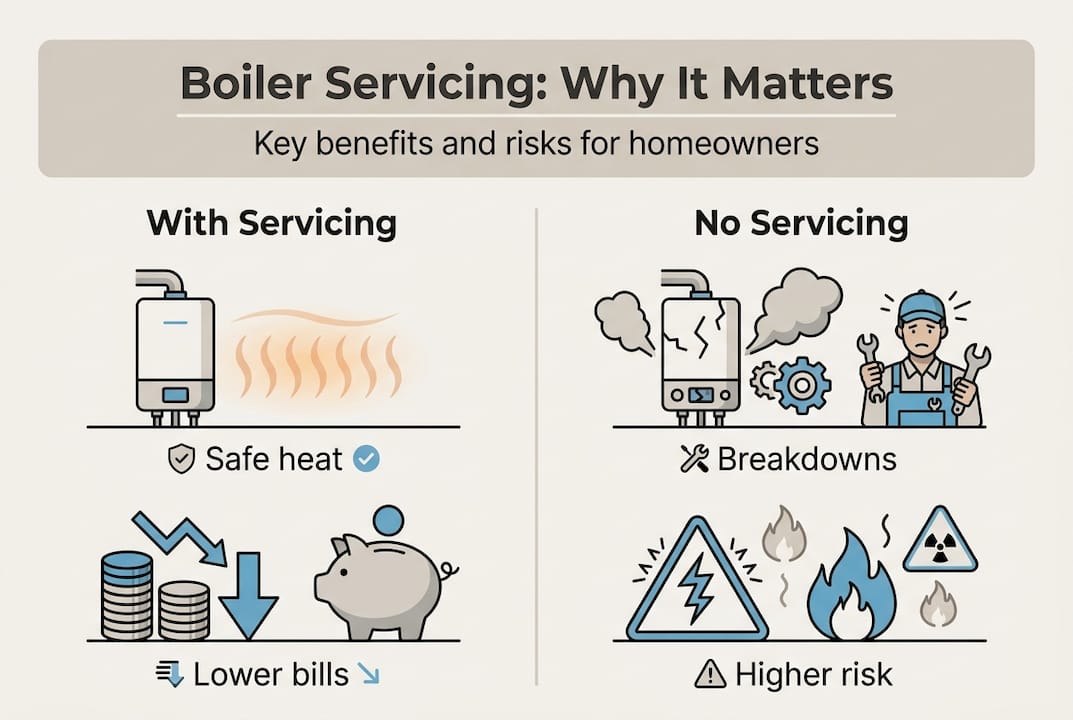
Here’s how a serviced boiler compares to a neglected one:
| Factor | Serviced boiler | Neglected boiler |
|---|---|---|
| Annual fuel cost | Lower, runs efficiently | Higher, wastes energy |
| Breakdown frequency | Rare | Common, often at worst times |
| Average lifespan | 15 to 20 years | 10 to 12 years |
| Safety risk | Minimal | Elevated CO and pressure risk |
| Emergency repair costs | Low | High, often $500 to $2,000+ |
The boiler repair services we provide in Plymouth reflect exactly this reality. We see the same pattern repeatedly: homeowners who skipped service for a few years facing repairs that dwarf the cost of routine maintenance.
For Plymouth specifically, a few local factors make servicing even more critical:
- Older home stock: Many Plymouth homes have aging heating systems that require closer attention and more frequent inspections.
- Coastal weather patterns: Humidity and temperature swings near the coast accelerate wear on boiler components.
- Local regulations: Massachusetts has specific requirements for gas appliance safety that licensed technicians are trained to meet.
The benefits of staying on schedule are straightforward:
- Lower monthly heating bills through improved efficiency
- Reliable warmth throughout winter without unexpected outages
- Reduced risk of emergency calls and costly last-minute repairs
- Peace of mind knowing your system is safe for your family
Understanding common boiler problems in advance helps you recognize when your system needs attention between service visits. And following heating system maintenance tips year-round keeps your boiler running at its best.
Common Issues Found During Boiler Servicing (and How to Fix Them)
Even when a boiler seems to be working fine, a professional service often uncovers problems that would have grown into expensive failures. Here are the most frequent issues technicians find during a service visit.
- Pressure loss: Low water pressure is one of the most common findings. It’s often caused by a small leak or a failing expansion vessel. Left unaddressed, it forces the boiler to work harder and can trigger automatic shutdowns.
- Pilot light failures: An unstable or extinguished pilot light usually points to a faulty thermocouple or a blocked jet. This is a safety issue, not just a convenience problem.
- Leaking seals and connections: Even minor drips around pipe joints or the boiler casing can lead to water damage and corrosion over time.
- Inefficient combustion: A dirty burner or incorrect gas pressure causes the boiler to burn fuel poorly, raising your bills without improving heat output.
- Blocked or deteriorating flue: A partially blocked flue is one of the most dangerous findings. It prevents exhaust gases from venting properly, creating a carbon monoxide risk.
- Worn pump or motorized valves: These components move hot water through your system. When they fail, you get uneven heating or no heat at all.
“Routine maintenance reduces breakdown risk and extends equipment life, giving homeowners both safety and long-term savings.”
Regular servicing catches these issues while they’re still small. A technician can often fix a minor seal leak or clean a burner during the same visit, preventing a call-back repair that costs far more. When problems are more serious, such as a cracked heat exchanger, early detection means you can plan a repair or boiler replacement in Plymouth on your schedule rather than in a crisis.
If you’re seeing boiler issues like strange noises, delayed heating, or pressure fluctuations between service visits, don’t wait. These are early warning signs that your system needs attention. And if repairs are no longer cost-effective, boiler installation services can get you set up with a modern, efficient system.
Pro Tip: Strange banging, whistling, or gurgling sounds from your boiler are never normal. Call a technician promptly rather than hoping the noise goes away on its own.
Our Take: What Most Guides Miss About Boiler Servicing
Most articles treat boiler servicing like a simple oil change: show up once a year, check a few boxes, and you’re done. That framing undersells what’s really at stake, especially for homeowners in a place like Plymouth.
Older homes here often have venting systems that were installed decades ago, sometimes with materials or configurations that no longer meet current safety standards. A generic checklist won’t catch a venting problem that’s specific to a 1970s construction style. That’s where local knowledge and real technician training make all the difference.
We’ve seen situations where a boiler passed a basic inspection but had a venting issue that only became apparent when a technician familiar with local home construction took a closer look. That kind of insight doesn’t come from a checklist. It comes from experience in the field.
Our advice: don’t just ask if your technician completed the service. Ask what they noticed, what they’d watch for next year, and whether anything about your specific setup concerns them. The best local boiler repair experts will always have something specific to say, not just a signed form to hand you.
Get Expert Boiler Servicing in Plymouth, MA
If this guide has made one thing clear, it’s that boiler servicing is not optional maintenance. It’s the difference between a safe, efficient home and a costly, stressful emergency. Plymouth homeowners deserve a heating system they can count on, and that starts with working with licensed professionals who know the area.

At 8th Bend Plumbing Heating and Cooling, we bring honest, thorough boiler care to Plymouth and the surrounding communities. Whether you need help troubleshooting your heating system, want to better understand your setup by understanding HVAC systems, or are ready to book professional boiler servicing, we’re here to help. Reach out today, and let’s make sure your home is ready for whatever winter brings.
Frequently Asked Questions
How often should I have my boiler serviced?
Residential boilers should be serviced once a year by a licensed technician to maintain safety, efficiency, and warranty coverage.
What does a typical boiler service include?
A standard service covers inspection, burner cleaning, flue testing, pressure checks, safety control verification, and a written report of findings.
Is boiler servicing required by law in Massachusetts?
There is no statewide legal mandate for annual boiler servicing, but it is strongly recommended for safety compliance, warranty maintenance, and optimal system performance.
Will regular servicing save me money?
Yes. Consistent servicing improves fuel efficiency, prevents expensive breakdowns, and extends your boiler’s lifespan significantly, saving you money over time.
How can I tell if my boiler needs a service?
Unusual noises, slow heating, frequent pressure drops, or higher than normal energy bills are all signs that your boiler is due for a professional inspection.


