

A sudden loss of heat during a Plymouth winter can quickly turn comfort into stress for homeowners. Boilers do more than simply warm your home, yet many myths fuel confusion about their maintenance and reliability. Understanding the real function of boilers and spotting warning signs early can help prevent unexpected and expensive breakdowns. This guide empowers you with trusted solutions, practical tips, and access to expert technicians so you can keep your home safe and cozy all season long.
Key Takeaways
| Point | Details |
|---|---|
| Modern Boilers Are Efficient | Today’s boiler systems utilize advanced technology for improved performance and energy efficiency. Homeowners should understand that modern units can significantly reduce heating costs compared to older models. |
| Regular Maintenance Is Crucial | Routine inspections by licensed technicians can prevent minor issues from escalating into major problems. Homeowners are advised to schedule annual checks to ensure safety and efficiency. |
| Recognize Warning Signs Early | Unusual noises, water discoloration, and pressure fluctuations are critical indicators of potential boiler issues. Homeowners should act promptly and consult professionals when these symptoms arise. |
| DIY vs. Professional Repairs | While basic maintenance tasks can be done by homeowners, complex repairs should always be left to licensed technicians. Making this distinction can protect both the system and the homeowner from costly mistakes. |
What Boilers Do and Common Myths
Boilers are complex heating systems that play a critical role in maintaining comfortable temperatures in homes across Plymouth. At their core, boilers generate heat by converting water into steam through controlled combustion processes. Unlike simple heating units, these systems circulate heated water or steam through radiators, baseboards, or radiant floor systems to distribute warmth efficiently.
Understanding boiler functionality requires dispelling several widespread misconceptions. Many homeowners believe boilers are old-fashioned or inefficient, but modern systems are actually highly sophisticated. Typically fueled by natural gas, oil, or electricity, contemporary boilers come in multiple configurations, including fire tube, water tube, and cast iron designs. Each type has unique characteristics that determine its performance, with some models achieving remarkable energy efficiency levels that significantly reduce utility costs.
Common myths about boilers persist despite technological advancements. Some people incorrectly assume all boilers operate identically or that maintenance is unnecessary. In reality, different boiler types require specific care and have varying operational requirements. Boiler safety and maintenance practices are crucial for ensuring longevity, performance, and household safety. Regular professional inspections can identify potential issues before they escalate into expensive repairs.
Pro tip: Schedule an annual boiler inspection with a licensed technician to catch potential problems early and maintain optimal system performance.
Most Frequent Boiler Problems Explained
Homeowners in Plymouth should be aware of the most common boiler issues that can compromise system performance and safety. Boiler failures often stem from preventable problems that require proactive maintenance and careful monitoring. The most frequent challenges include pressure fluctuations, water quality issues, and mechanical wear that can gradually degrade heating system reliability.
One of the most critical concerns is corrosion, which can silently damage boiler components over time. Mineral buildup, low water levels, and inconsistent water chemistry contribute to accelerated wear and potential system breakdown. Different boiler types experience unique vulnerabilities: cast iron models may develop crack patterns, while newer condensing boilers can suffer from heat exchanger degradation. Common boiler problems like scaling and safety device malfunctions require specialized diagnostic approaches and professional intervention.
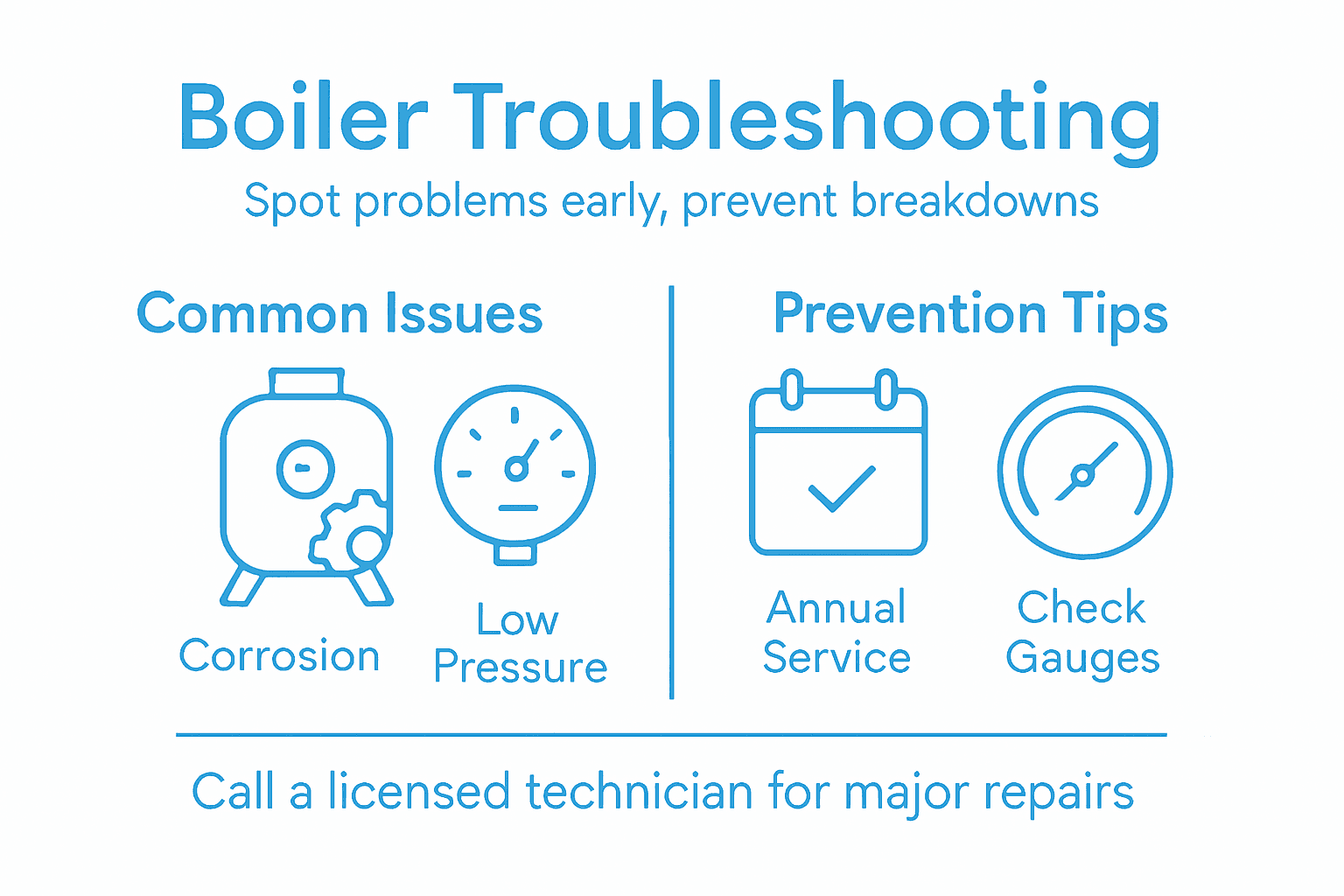
Pressure-related issues represent another significant risk for home heating systems. Improperly functioning safety valves, excessive pressure buildup, or chronic low water levels can transform minor maintenance concerns into potentially catastrophic equipment failures. Homeowners should watch for warning signs such as unusual noises, inconsistent heating performance, water discoloration, or sudden pressure gauge fluctuations. These symptoms often indicate underlying mechanical stress that demands immediate professional assessment.
Pro tip: Install a carbon monoxide detector near your boiler and schedule quarterly professional inspections to catch potential problems before they escalate into expensive repairs.
Here’s a summary of common boiler problems, likely causes, and suggested immediate actions:
| Problem | Common Cause | Immediate Action |
|---|---|---|
| Low water pressure | Leak or faulty pressure valve | Refill system and inspect for leaks |
| Unusual noises | Mineral buildup or air traps | Schedule inspection for buildup |
| Water discoloration | Corrosion or sediment | Flush system and check for rust |
| Heating inconsistencies | Circulation or sensor issue | Call technician for diagnostics |
| Repeated shutoffs | Safety device malfunction | Have safety systems professionally checked |
What Warning Signs Really Mean
Boiler warning signs are like a sophisticated communication system that alerts homeowners to potential problems before catastrophic failures occur. Boiler symptoms reveal underlying mechanical issues that require immediate professional attention. Understanding these signals can mean the difference between a simple repair and a complete system replacement.
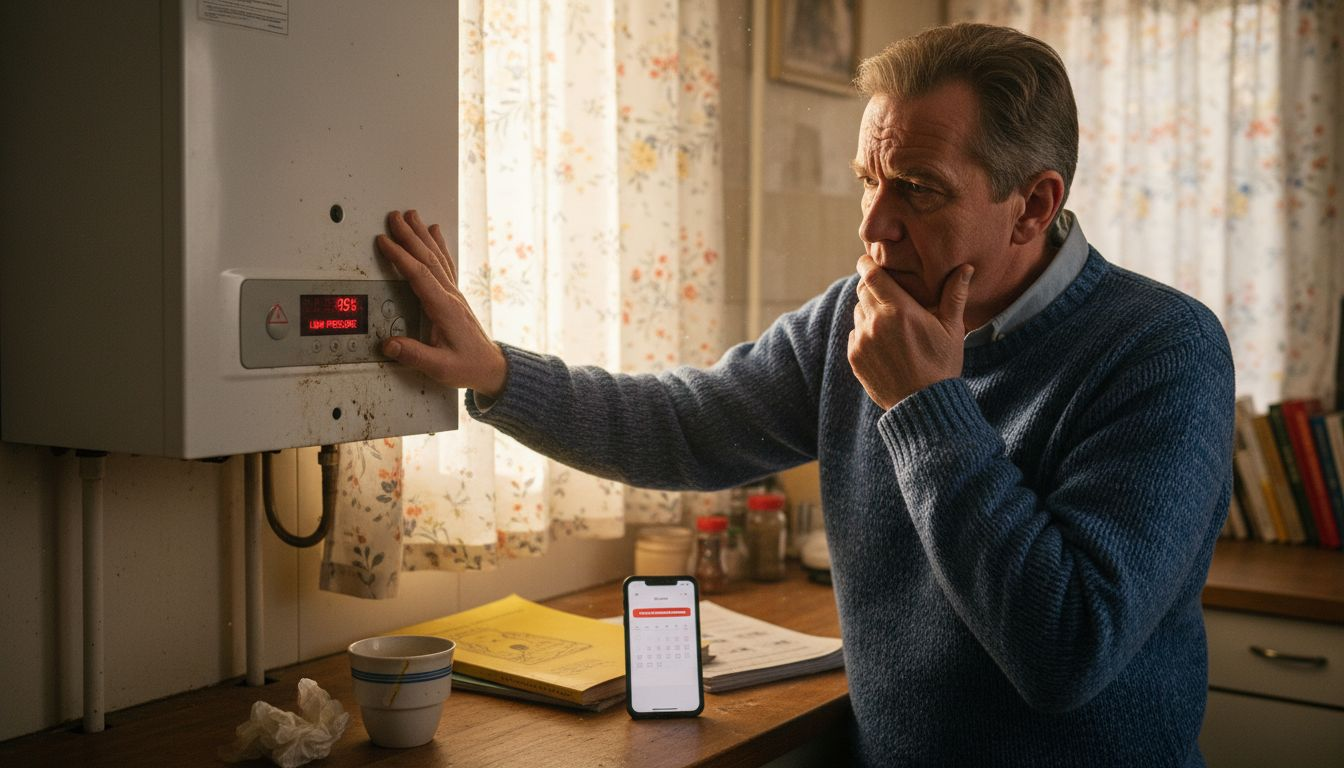
Some warning signs are more subtle than others, demanding keen observation and technical knowledge. Unusual noises such as banging, whistling, or rumbling can indicate serious internal problems like mineral buildup, failing components, or pressure inconsistencies. Water discoloration suggests potential corrosion or sediment accumulation in the system, while inconsistent heating performance might point to circulation issues or failing heating elements. Critical warning signs include abnormal system behaviors that compromise both efficiency and safety.
Pressure-related indicators represent another crucial set of warning signs homeowners should never ignore. Significant pressure gauge fluctuations, water leaks around the boiler, or unexplained drops in system pressure could signal potential safety hazards. These symptoms often suggest problems with safety valves, expansion tanks, or internal seals that require immediate professional diagnostic evaluation. Homeowners in Plymouth should treat these warning signs as urgent communication from their heating system, demanding swift and knowledgeable intervention.
Pro tip: Photograph any visible boiler issues and create a written log of symptoms to help technicians diagnose problems more quickly during their initial assessment.
DIY Solutions Versus Professional Repairs
Homeowners often face a critical decision when boiler problems emerge: tackle repairs independently or call in professional technicians. Boiler maintenance requires careful risk assessment that goes far beyond simple repair techniques. While the temptation to save money through DIY solutions is understandable, boiler systems involve complex mechanical and safety considerations that can quickly transform a minor issue into a dangerous and expensive problem.
Some maintenance tasks are suitable for homeowner intervention, such as visual inspections, cleaning external components, and checking pressure levels. Basic maintenance might include replacing air filters, cleaning visible surfaces, and monitoring system performance. However, anything involving internal components, pressure systems, gas connections, or electrical elements requires professional expertise. Critical boiler repairs demand specialized technical knowledge to ensure safety and system integrity. Attempting complex repairs without proper training can void warranties, create safety hazards, and potentially cause catastrophic system failures that far exceed the cost of professional service.
Professional technicians bring critical advantages that DIY approaches cannot match. They possess specialized diagnostic tools, understand intricate system designs, and can identify potential issues before they become major problems. Certified professionals are trained to navigate complex safety regulations, perform precise calibrations, and ensure that your boiler operates at peak efficiency. Moreover, professional repairs typically come with warranties, giving homeowners peace of mind and financial protection against future malfunctions. The investment in professional service ultimately saves money by preventing extensive damage and extending the overall lifespan of your heating system.
Pro tip: Keep a detailed maintenance log and always request documentation of professional repairs to track your boiler’s service history and maintain warranty compliance.
Compare tasks suitable for DIY maintenance versus those requiring a professional:
| Task Type | Homeowner DIY | Licensed Technician Only |
|---|---|---|
| External cleaning | Wipe surfaces, clear debris | Full internal cleaning |
| Pressure check | Monitor pressure gauge | Adjust safety valves, recalibrate |
| Replace air filter | Yes, if accessible | Replace internal system filters |
| Inspect for leaks | Visual inspection | Repair seals, fix connections |
| Gas/electrical repairs | Never | Perform all complex repairs |
When to Call a Licensed Technician
Boiler systems represent complex machinery where professional intervention becomes crucial for safety and performance. Licensed technician certification ensures critical safety standards are met during repair and maintenance procedures. Recognizing the precise moments when professional expertise is required can prevent potential catastrophic system failures and protect your home’s heating infrastructure.
Complex repairs demand specialized knowledge that goes beyond basic homeowner maintenance. Situations requiring immediate licensed technician intervention include persistent pressure fluctuations, gas leaks, unusual combustion sounds, water discoloration, or significant drops in heating efficiency. These symptoms often indicate underlying mechanical issues that could compromise system integrity. State regulations mandate professional inspections for certain types of boiler repairs, particularly those involving gas connections, pressure systems, or safety mechanisms.
Beyond immediate repair needs, licensed technicians provide comprehensive diagnostic services that extend your boiler’s operational lifespan. They possess advanced tools and training to perform precise calibrations, identify potential future failures, and ensure your system meets current safety standards. Homeowners in Plymouth should understand that professional intervention is not merely about fixing current problems but preventing future expensive breakdowns. Certified technicians can detect early warning signs, recommend proactive maintenance, and help you make informed decisions about your heating system’s long-term performance.
Pro tip: Create a digital file documenting all boiler maintenance and repair history, including dates, technician names, and specific services performed to help track your system’s health.
Protect Your Home with Expert Boiler Repair and Maintenance
Boiler problems like pressure fluctuations, corrosion, and unusual noises can threaten your home’s comfort and safety. This article highlights the importance of spotting warning signs early and avoiding breakdowns through professional care. If you want to prevent costly repairs and extend your boiler’s life, understanding these challenges is the first step. At 8th Bend Plumbing Heating and Cooling, we specialize in plumbing repair and boiler services designed to keep your system running safely and efficiently year-round.

Don’t wait for small boiler problems to turn into major emergencies. With our team’s integrity, honesty, and expert knowledge, you can trust us to handle everything from thorough inspections to complex repairs. Ready for peace of mind and reliable heat in your Plymouth home or business? Visit 8th Bend Plumbing Heating and Cooling now to book your service or learn more.
Frequently Asked Questions
What are the common warning signs that my boiler needs repair?
Common warning signs include unusual noises (banging or rumbling), inconsistent heating performance, water discoloration, and pressure gauge fluctuations. If you notice these symptoms, it’s important to call a professional technician for an inspection.
How can I prevent boiler breakdowns?
To prevent breakdowns, schedule regular professional inspections and perform basic maintenance, such as checking pressure levels and replacing air filters. Keeping a detailed maintenance log can also help you track your boiler’s health.
What should I do if my boiler’s pressure gauge fluctuates?
Fluctuating pressure gauges can indicate serious issues like faulty safety valves or leaks. It’s crucial to contact a licensed technician to diagnose and address the problem before it escalates.
Can I perform maintenance on my boiler myself?
Homeowners can carry out basic tasks such as visual inspections and external cleaning, but any internal repairs, gas connections, or electrical work should always be handled by a licensed technician to ensure safety.
Recommended
-
- 7 Essential Steps for a Boiler Maintenance Checklist at Home – 8th Bend Plumbing Heating and Cooling
- Boiler Troubleshooting Guide for Reliable Home Heating – 8th Bend Plumbing Heating and Cooling
- Boiler Replacement vs Repair: Choosing Wisely in MA – 8th Bend Plumbing Heating and Cooling
- What is Boiler Service? Understanding Its Importance and Function – 8th Bend Plumbing Heating and Cooling


